
Recovery is not what happens when a player has failed to train. It is part of training. Soccer asks young players to sprint, stop, turn, make decisions, handle nerves and then do it again, often around school, homework and family life. Rest gives their body and mind room to adapt to that work. It also makes it more likely they show up to the next session ready to learn instead of simply trying to survive it.
For parents, the useful recovery plan is usually wonderfully boring: regular sleep, enough food and water, sensible schedules, a genuine day away from organized sport and an open conversation when something feels off. There is no recovery gadget that can replace those foundations. The win is not squeezing one more activity into a tired week. The win is building a routine a young player can enjoy for years.
REST IS PART OF GETTING BETTER
Training creates a challenge. Recovery is when the body responds to that challenge. That does not mean a player should never feel tired after a hard match or a demanding practice. It means the total workload needs breathing room. A player who is constantly sore, flat, irritable or dreading soccer is not necessarily lacking toughness. They may need adults to look more closely at the balance of stress and recovery.
The American Academy of Pediatrics notes that prevention of overuse and burnout includes attention to sleep, nutrition, hydration and the many stresses young people carry outside sport. Its clinical report on overuse injuries, overtraining and burnout advises at least one day of rest each week from organized sport. That is not lost development. It is a way to protect both physical recovery and enthusiasm.
MAKE SLEEP THE ANCHOR
Sleep is the recovery tool that is available in every home, but it is also the first thing a busy season steals. The CDC recommends 9 to 12 hours per 24 hours for children ages 6 to 12 and 8 to 10 hours for teenagers. Its sleep guidance for families also encourages consistent bed and wake times, dimmer evening light and a media curfew when screens keep pushing bedtime later.
Parents do not need to create a perfect bedtime ritual. Start with what is repeatable: get the bag packed earlier, finish the post-practice meal without a rush, set a time to put the phone away and protect a predictable wind-down. A player who has an early tournament match may need an earlier night more than another late technical session. That is a practical choice, not a soft one.

AFTER A GAME, KEEP THE ROUTINE SIMPLE
After a normal game, the basics are enough. Let the player cool down, drink water, eat a familiar meal or snack and get home to rest. A shower, clean clothes and a calm car ride can be more useful than a detailed post-game analysis. If the match was hot or part of a tournament, add shade, fluids and time to settle before asking them to do the next thing.
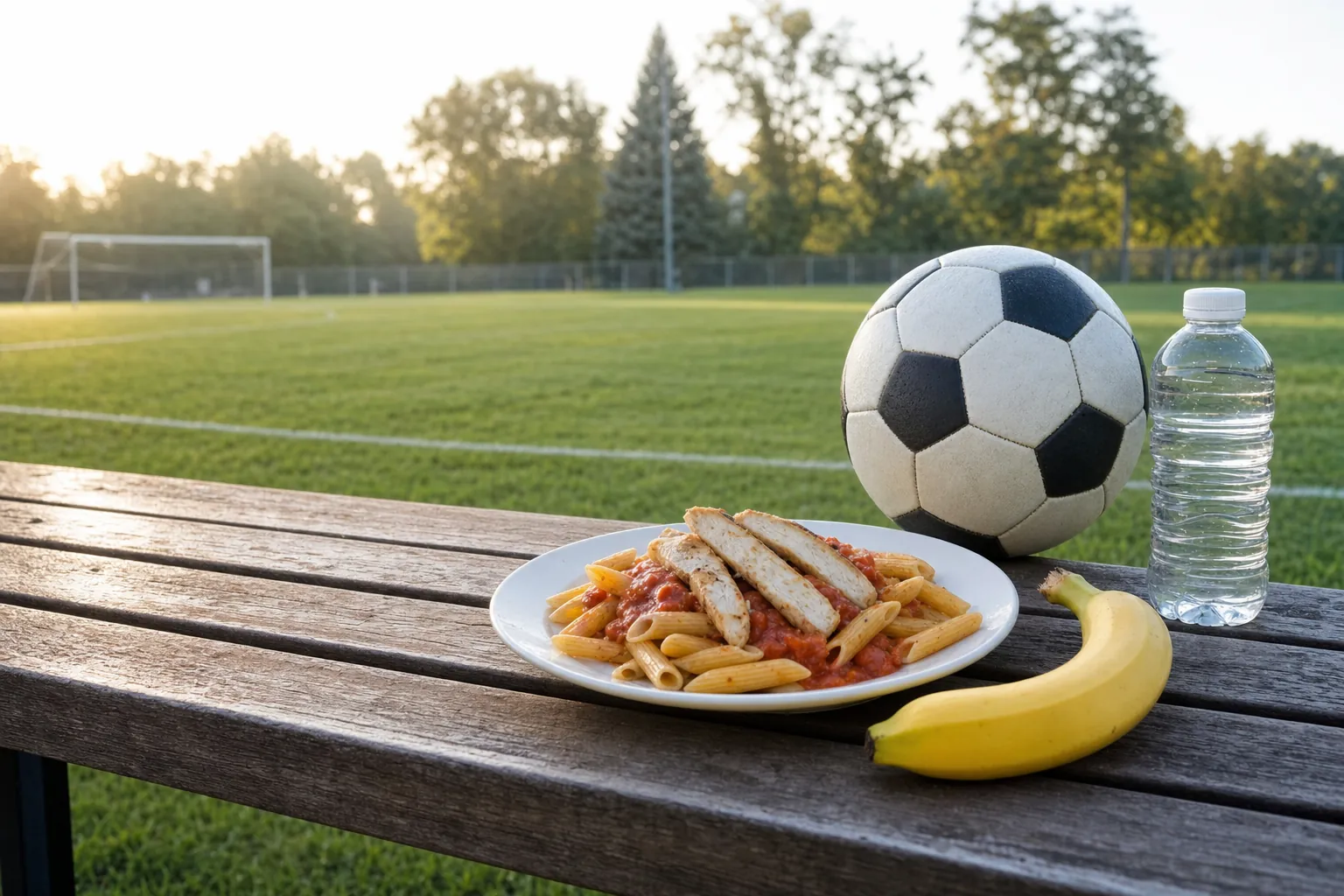
Food supports recovery, but it does not need to be a special “recovery” product. A normal meal that includes carbohydrates, protein and foods the player likes is a sensible place to start. Our pre-game meals guide explains the same parent-friendly approach to fuel: ordinary food, familiar choices and no match-day experiments.
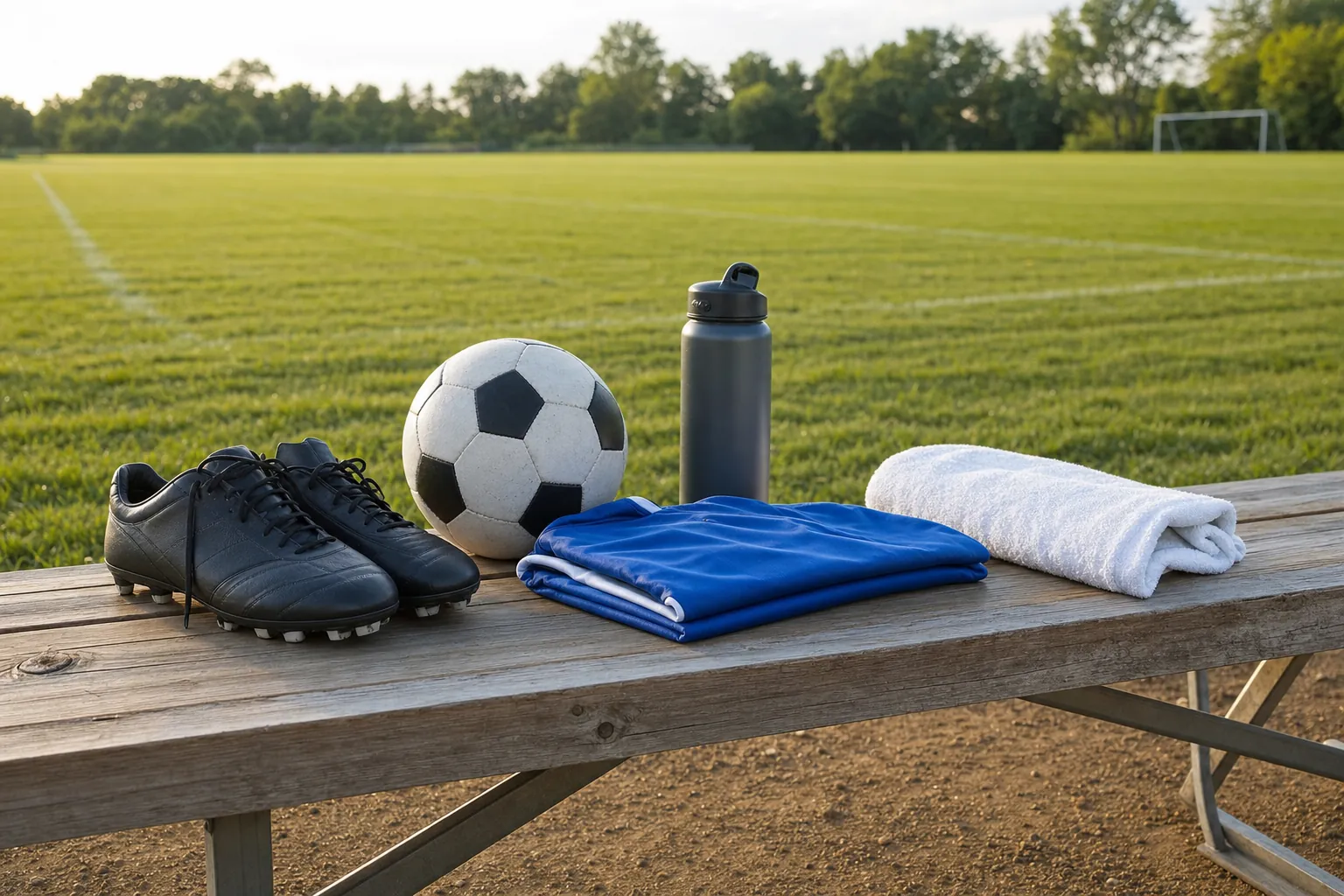
Recovery also starts before the final whistle. Bring a water bottle, have a change of clothes ready and avoid packing the evening so tightly that the player has to race from the field to the next commitment. A little margin makes it easier to eat, bathe, finish homework and get to bed at a useful time. For families, that is often the difference between a demanding season that feels manageable and one that starts to wear everyone down.
DON'T CONFUSE TOUGHNESS WITH IGNORING PAIN
Soccer teaches resilience, but resilience is not pretending that every ache is nothing. A player can be tired after hard work and still need to speak up when something feels wrong. Pain that changes the way they run, turn, jump or kick should not be trained through. Neither should a limp, swelling, a sharp pain after a specific incident, or head injury symptoms. Those are reasons to stop and get appropriate medical advice.
Parents do not need to be alarmed by every complaint. They do need to notice the trend. A sore spot that gets better with normal rest is different from the same issue returning week after week. Keep a short note of what happened, when it started and what makes it better or worse. That gives a coach or clinician a far clearer picture than asking a player to “push through” and hope for the best.
The American Academy of Pediatrics' sports injury guidance for families encourages planned time away from training and attention to rest periods during practices and games. That is sensible prevention, not an excuse to be less committed.
LET A DAY OFF ACTUALLY BE OFF
A day off should not quietly become extra private training, a speed session, a second team practice and a long list of drills. Light movement, free play, a walk, a bike ride or another sport can feel good. But the player should also have time to be a kid, see friends, catch up on school and simply not think about soccer for a while.
That space protects more than muscles. The American College of Sports Medicine highlights rest and recovery as important safeguards when young athletes face repetitive training and early specialization. Its youth sport specialization resource emphasizes ample opportunity for recovery alongside well-structured training. A player returning with curiosity and energy has more to gain from the next session than one who is already mentally spent.
WATCH FOR PATTERNS, NOT ONE TOUGH DAY
Every player has an occasional hard session, disappointing result or sore day. The signal to pay attention is a pattern. Notice fatigue that does not lift, pain that changes movement, repeated complaints, declining school focus, mood changes, trouble sleeping or a loss of enjoyment. Those are reasons to talk with the player, communicate with the coach and involve a healthcare professional when appropriate.
Do not ask a child to diagnose themselves. Simple questions work better: “How does your body feel today?” “What felt hard this week?” “Are you looking forward to training?” Their answer may not solve the issue, but it tells you whether the schedule is helping or starting to cost too much. Pain with swelling, pain after a specific injury, a limp, head injury symptoms or severe heat illness needs prompt medical attention, not a wait-and-see recovery plan.
HOW PARENTS CAN HELP WITHOUT TAKING OVER
Parents set the environment around youth soccer. You cannot do the recovery for a player, but you can make the healthy choice easier. Keep water and normal food available. Protect sleep when the schedule gets busy. Resist the urge to add another optional session when a player looks worn down. And make it safe for them to say they are tired, frustrated or sore without feeling they have let anyone down.
The car ride home is a powerful recovery tool, too. Instead of asking for a full analysis immediately, try a simple question: “Did you enjoy it?” or “What do you want to remember from today?” Let the player decide whether they want to talk. They have just spent a lot of emotional energy competing. A little quiet can be as restorative as any stretch routine.
When a player does have a difficult week, communicate early and directly with the coach. Explain the practical issue, whether it is persistent pain, a heavy school week or a family need for a lighter schedule. Good development relies on adults sharing the right information, not on a child carrying it alone.
BUILD A WEEK THAT LEAVES ROOM TO BREATHE
Look at the whole calendar, not just the club schedule. School exams, travel, a growth spurt, another sport, poor sleep and family stress all affect how a player experiences training. A busy week may call for simpler meals, an earlier bedtime or one less optional activity. That is not a lack of commitment. It is smart planning that keeps soccer sustainable.
FC National’s development approach is built around long-term progress, not chasing a temporary edge at any cost. Parents can reinforce that by praising effort, teamwork and honest communication, not only minutes played or goals scored. The healthiest message is clear: rest is allowed, reporting pain is responsible and improvement takes time.
RECOVERY AFTER A TOURNAMENT WEEKEND
Multiple games in a short period can leave a young player more tired than they expect, even when they seemed energized at the field. The following day does not need to be another performance test. Let them sleep, eat regular meals, drink fluids, move lightly if they want to and return to their normal routine. A walk, easy bike ride or casual play can be fine, but the purpose is to feel better, not to prove they are working harder than everyone else.
If another training session is scheduled soon after a tournament, encourage the player and coach to be honest about how their body feels. Some players will be ready for normal participation. Others may need a lighter session or more rest. Growing bodies do not all recover on the same timetable, and a schedule that respects that difference protects a player's long-term relationship with the sport.
For hot weekends, recovery also includes paying attention to heat stress. Cool down in the shade, offer fluids and make sure the player is genuinely improving before the next game. Confusion, fainting, severe headache or a player who does not improve after cooling and drinking needs urgent medical care. No result is worth treating serious symptoms as normal fatigue.
When the season is busy, use the next morning as a simple check-in. Is the player moving normally, eating normally and in a reasonable mood? Are they eager to get outside, or do they seem unusually drained? You are not looking for a perfect score. You are looking for a pattern that helps you make kinder, smarter choices before a minor issue becomes a bigger interruption. This small pause can prevent a busy schedule from becoming an automatic habit and protect their enthusiasm for soccer.
A SIMPLE RECOVERY CHECKLIST
- Protect sleep: keep bedtime as consistent as the week allows.
- Plan a real rest day: leave at least one day each week away from organized sport.
- Refuel normally: offer water and a familiar meal or snack after training.
- Keep the schedule honest: count school, travel and other activities as part of the load.
- Listen for patterns: respond early to persistent pain, fatigue or loss of enjoyment.
- Keep it enjoyable: leave room for free play, friends and time away from the game.
FREQUENTLY ASKED QUESTIONS
How many rest days do young soccer players need?
Young players need regular time away from organized training and competition. The American Academy of Pediatrics advises at least one day off each week from organized sport, while the exact schedule should account for the player’s age, season, school load and how they are feeling.
How much sleep does a youth soccer player need?
Children ages 6 to 12 generally need 9 to 12 hours of sleep each day. Teenagers ages 13 to 18 generally need 8 to 10 hours. A regular bedtime and a quiet wind-down routine make those targets more realistic than simply hoping an exhausted player falls asleep.
Should a player train when sore?
Normal tiredness after a hard session is different from pain that changes how a player runs, cuts, kicks or moves. If pain persists, is getting worse, causes a limp or comes with swelling, seek advice from an appropriate health professional before adding more training.
What is the best recovery routine after a soccer game?
Keep it simple: cool down, drink, eat a normal meal or snack, shower, sleep and let the body settle. A player does not need expensive devices or a complicated supplement routine to recover well.
RELATED POSTS
 PARENT GUIDE
Pre-Game Meals for Youth Soccer Players
A parent-friendly guide to what young soccer players should eat before a game, when to serve it and how to keep match day simple.
 PARENT GUIDE
Soccer Tryout Tips: 8 Ways to Prepare and Stand Out
Eight practical soccer tryout tips for young players: what coaches notice, how to prepare and how to stay composed on the day.
 PLAYER GUIDE
Soccer Tryout Drills: 8 Ways to Practice With Purpose
Eight simple soccer tryout drills that help young players prepare their touch, decisions, movement and confidence.