
Trying to make a soccer team can make a young player feel as if every touch has to be perfect. It does not. At a good tryout, coaches are looking for a pattern: how a player receives information, responds to mistakes, connects with teammates and keeps working when a moment gets difficult. Those habits are much more repeatable than one highlight-reel move.
For families, the goal is not to manufacture a different player in a week. It is to help the player arrive organized, ready to compete and able to show the game they already have. This guide focuses on the practical choices that make that easier, while keeping the experience in perspective.
START WITH THE RIGHT EXPECTATION
Making a soccer team is not the same as winning an audition. Clubs build groups, not just collections of individual skills. A coach may be looking for a player who can support the ball, communicate, cover a teammate or learn a role that is new to them. The player who keeps moving after a pass and recovers after losing the ball can show a great deal in a short session.
That is why it helps to replace “I have to impress everyone” with a few clear jobs: listen, compete, make the next useful choice and stay connected to the group. U.S. Soccer describes player identification as looking at potential and progression, not merely an isolated performance. A club tryout is different, but the principle is useful for young players and parents alike.
Before committing to a club, families should also look beyond selection. Ask how teams train, how coaches communicate, how players are placed and what the weekly commitment looks like. FC National's club approach and coaching staff give families a useful starting point for those conversations.
BUILD THE HABITS COACHES CAN TRUST
A coach needs to see more than a player's favorite move. The most useful habits are visible again and again: checking before receiving, taking a first touch into space, playing a simple pass with the right weight, moving after the pass and reacting quickly when possession changes. None require a speech. They show up in the rhythm of the session.
Players can practice these habits at home in short, realistic ways. Pass against a wall and take the first touch to either side. Dribble in a small box, then change direction on a call. Play a simple 1v1 game through a small gate. The aim is not to complete hundreds of repetitions. It is to learn how the body and ball feel when the next decision matters.
FC National's soccer footwork drills guide offers simple ways to develop balance, turns and first touch. Players who want a more tryout-specific session can use the soccer tryout drills guide to work on the technical details without turning the week into a grind.
PREPARE FOR THE WEEK, NOT JUST THE DAY
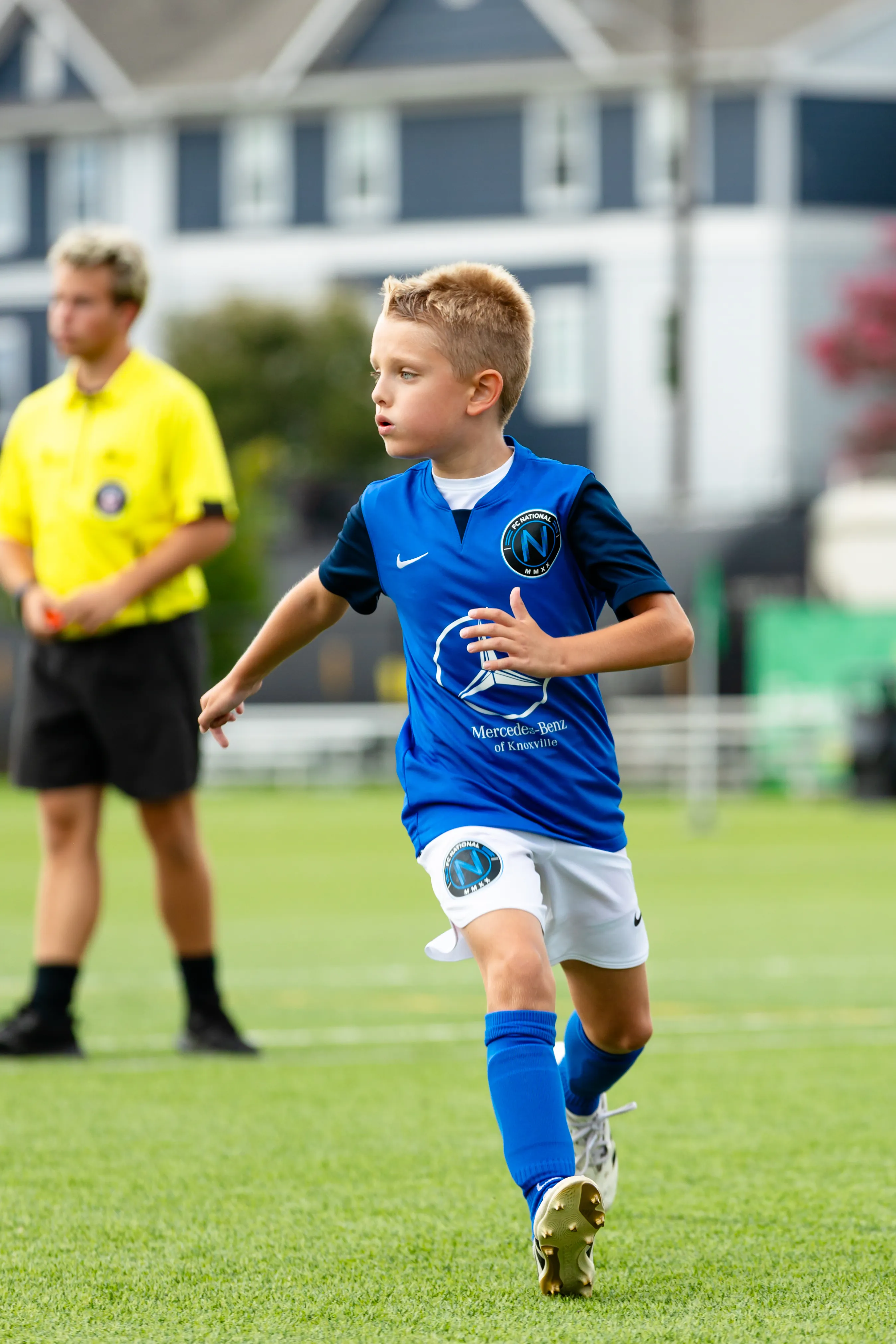
The week before a tryout is a time to sharpen, not cram. A player who suddenly doubles their workouts can arrive tired, sore or carrying a small problem they did not need. Keep the routine familiar: regular sleep, normal meals, a few purposeful touches on the ball and enough rest to feel lively.
A simple three-part plan works well for many young players. One short session can focus on first touch and passing. Another can include dribbling, turning and a few changes of direction. A third can be light small-sided play or finishing for fun. Leave the hardest work early in the week, and keep the final day calm. The American Academy of Pediatrics advises young athletes to avoid performance shortcuts and build around food, fluids, training, conditioning and rest.
Pack boots, shin guards, water and any requested paperwork the night before. Familiar gear is best. Tryout day is not the moment to wear stiff new boots, skip breakfast because of nerves or test a supplement. If a player is sick, injured or unusually tired, talk with an appropriate health professional and the club instead of treating discomfort as a toughness test.
SHOW THE SIMPLE THINGS IN THE SESSION
When the session starts, take a moment to understand the activity. Listen for the rules, watch the first repetition and ask one clear question if something is genuinely unclear. Then begin with a reliable action. A clean pass, a useful supporting run or a controlled defensive recovery can settle nerves and help the player enter the game.
In possession, look before the ball arrives. If space is open, take it with the first touch. If pressure is close, use the simple pass and move again. Without the ball, find a helpful angle rather than standing behind a teammate. After losing it, react quickly. These moments are easy for coaches to trust because they make everyone around the player better.
Communication matters, too, but it does not mean constant shouting. Short information such as “turn,” “time,” “man on” or a teammate's name can be enough. Encourage others and acknowledge a coach's instruction. A young player does not need to become the loudest person on the field. They need to be a teammate others can play with.
PRACTICE THE PART OF THE GAME THAT TRAVELS
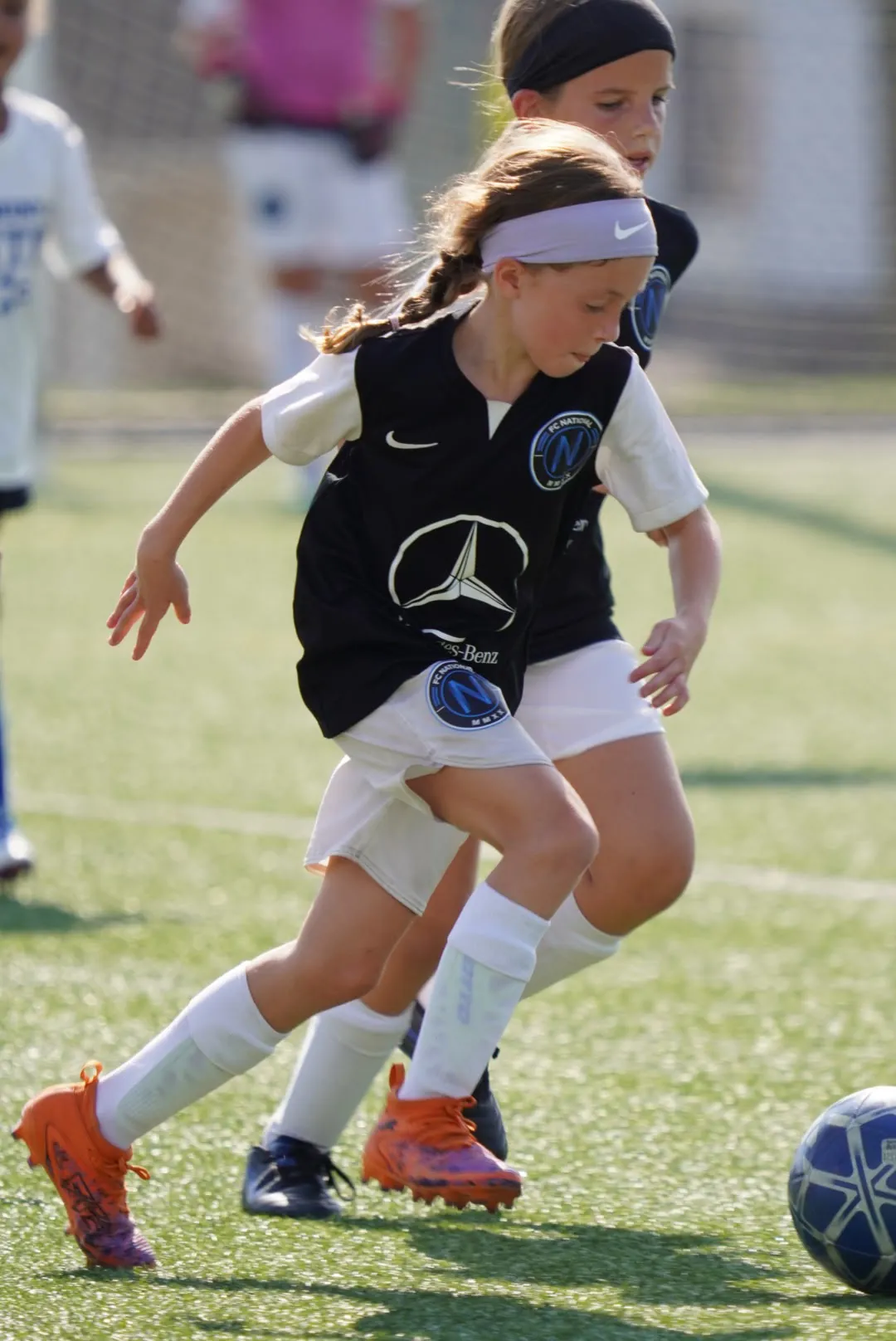
Young players sometimes prepare for a tryout by collecting tricks. A new move can be fun, but it is not a reliable plan on its own. The habits that travel to every field are much less dramatic: a first touch that stays close, a pass played to a teammate's safe side, a run that creates a new angle and a quick recovery when the ball changes hands.
Parents can make extra practice more useful by choosing one game problem instead of giving a long list of corrections. In a driveway or yard, that might be, “Can you receive and turn toward the open marker?” With a partner, it might be, “Can you pass, move and become available again?” A player learns more from solving one clear problem several times than from stopping after every touch.
It also helps to include play. A short 2v2, a first-to-five passing game or a small gate challenge creates the pressure to look up, make choices and react. The player will not control every result, and that is the point. Soccer is a game of changing pictures. Calm decisions in those moments are more valuable than a perfect pattern with no defender or teammate involved.
Keep the standard age-appropriate. A younger player may be building comfort with the ball and basic movement, while an older player can work on scanning, position-specific details and game awareness. Progress does not need to look the same for every child. Consistent, enjoyable work is far more likely to last than a demanding plan that makes the player dread the ball.
LET COACHABILITY DO SOME OF THE TALKING
Players are often asked to try a new role, play with a different group or adjust after feedback. Treat that as useful information, not a verdict. A winger asked to play outside back can still show awareness, effort and a willingness to support the game. A defender asked to move higher can still show calm passing, movement and recovery.
The best response to a correction is usually short: listen, acknowledge it and try the change on the next repetition. Explaining every mistake or becoming visibly frustrated takes attention away from the next play. Coaches understand that young players are still learning. They notice whether a player stays curious and keeps trying.
Parents can support this by avoiding an instruction stream from the sideline. Before the session, one message is enough: compete, communicate and enjoy the game. Afterward, ask what the player learned before asking about the outcome. That gives the player room to reflect instead of feeling graded during the drive home.
HANDLE MISTAKES LIKE A TEAM PLAYER
Every tryout has a misplaced pass, a missed chance or a moment when a player loses the ball. The mistake is not usually the deciding part. The response is. Recover defensively, offer for the next pass, support a teammate or reset with a breath and a simple job. That response gives coaches a better picture of how the player will handle a competitive season.
It also helps to keep the result in proportion. A player may not be placed on the team they expected, and that can be disappointing. The next useful question is not “Was the player good enough?” It is “What environment will help the player keep learning?” Families can use FC National's guide to how soccer tryouts work to understand the process and make a thoughtful next decision.
A SIMPLE SOCCER-TEAM CHECKLIST
- Before the week: confirm the location, time, age group and required gear.
- During the week: use a few short, familiar sessions instead of adding exhausting new work.
- The night before: pack gear, eat a normal meal and protect sleep.
- At the field: arrive early enough to settle, listen and get a few calm touches.
- In the session: communicate, make simple useful choices and reset quickly after errors.
- Afterward: let the player share what they learned, then consider the next useful step together.
HOW FC NATIONAL HELPS PLAYERS GROW INTO THE GAME
At FC National, making a team is the beginning of a development relationship, not the finish line. Young players need a setting that challenges their touch, awareness, movement and mindset while giving them room to keep learning. That is why the club's development approach connects technical work with game understanding and confidence.
Families considering the next step can explore FC National's teams and tryout information, then contact the club for current age groups, dates and registration details. The right conversation can help a family decide whether the opportunity fits the player's stage and goals.
FC NATIONAL TRYOUTS
READY TO TAKE THE NEXT STEP?
FC National gives ambitious young players a competitive place to build skill, awareness and confidence over time.
ASK ABOUT TRYOUTS →FREQUENTLY ASKED QUESTIONS
What do soccer coaches look for at tryouts?
Coaches usually look at the whole player: first touch, effort, awareness, teamwork, response to coaching and how the player reacts after a mistake. A goal or a clever move can help, but reliable habits over a full session are often more meaningful.
Can a beginner make a soccer team?
A newer player can make progress quickly by learning the basic rules, arriving ready to work and showing a willingness to listen. The right team should offer an appropriate challenge, not require a young player to already know everything.
How much should a player practice before soccer tryouts?
A short, consistent routine is better than cramming. A few focused sessions with ball work, movement, rest and normal meals can help a player arrive fresh. Avoid suddenly adding long or exhausting workouts in the final week.
What should parents do after a soccer tryout?
Start with what the player noticed and enjoyed. Ask what felt easier, what was challenging and what they want to improve. Keeping the conversation calm helps a young player learn from the experience, whatever the result.
RELATED POSTS
 PLAYER GUIDE
Soccer Tryout Drills: 8 Ways to Practice With Purpose
Eight simple soccer tryout drills that help young players prepare their touch, decisions, movement and confidence.
 PLAYER GUIDE
How Soccer Tryouts Work: A Parent's Guide
What families can expect before, during and after a youth soccer tryout, plus the questions worth asking along the way.