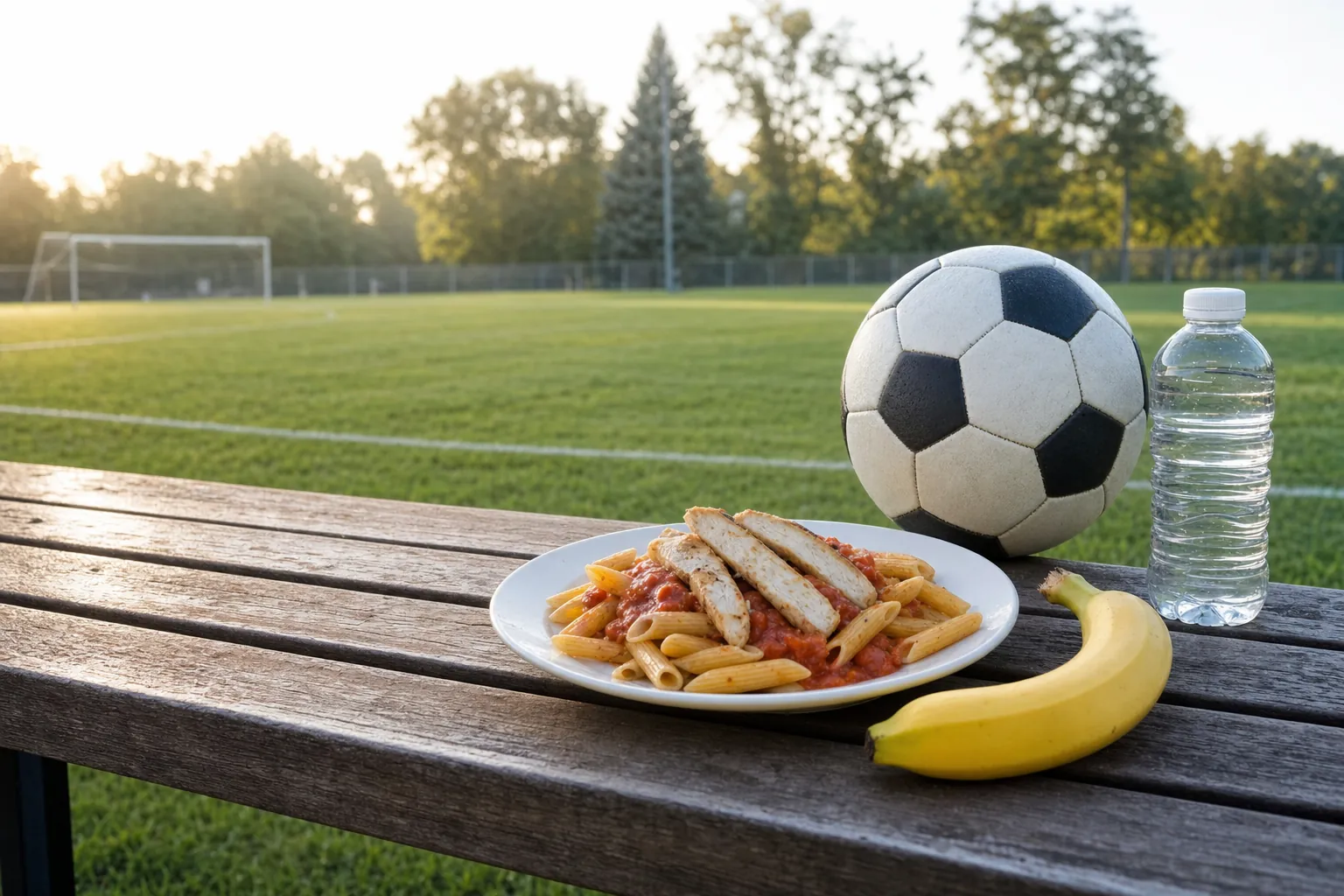
Before a soccer game, parents do not need to find a magic meal. The goal is much simpler: help a young player arrive with steady energy, a comfortable stomach and enough fluid on board to play with confidence. The most reliable plan is ordinary food, eaten early enough, with no experiments on a day that already has enough excitement. It should feel like a dependable family routine, not another source of pressure.
For most players, that means a carbohydrate-forward meal a few hours before kickoff, followed by a small snack only if they are hungry closer to warmups. The Academy of Nutrition and Dietetics suggests a high-carbohydrate, moderate-protein, moderate-fat pre-match meal three to four hours before play for soccer athletes. Its soccer nutrition guidance also stresses regular meals and fluids across a busy weekend, not one dramatic meal at the last minute. That lets parents focus on the part that matters most: a player who feels settled, supported and ready to play.
START WITH THE CLOCK, NOT A PERFECT MENU
Timing changes the job the food needs to do. A family eating at home three hours before a match can serve a normal, satisfying meal. A family driving to an 8 a.m. kickoff has less time and should make breakfast lighter. A player with only 45 minutes before warmups needs a small top-up, not a plate piled high because someone said pasta is good for soccer.
A useful rule is to work backward from kickoff. At three to four hours out, serve a familiar meal. Around one to two hours out, a smaller snack may help if the player is hungry. In the final 30 to 60 minutes, keep anything they eat small and easy to digest. This is not a rigid prescription. Age, appetite, heat, game intensity, travel and the player’s own stomach all matter. Use practices to learn what feels good for your child.
- Three to four hours before: a normal carbohydrate-led meal with a modest amount of protein.
- One to two hours before: a smaller snack, if needed.
- Thirty to 60 minutes before: a small familiar carbohydrate snack if the player is hungry.
- All morning or afternoon: drink water steadily, instead of trying to catch up at the field.
WHAT A GOOD PRE-GAME MEAL LOOKS LIKE
Carbohydrates are the centerpiece because they are a readily available source of energy for active muscles. Add a modest portion of protein for staying power, then keep heavy fats and very high-fiber foods lower when the game is close. In real family terms, think pasta with a light tomato sauce and chicken, a turkey sandwich with fruit, rice with eggs, or a baked potato with a simple topping. The right choice is one your player enjoys and has eaten comfortably before.
Portion size does not need a calculation. A younger player may be satisfied with half a sandwich, fruit and water. An older player with a longer day may need a fuller plate. Ask whether they feel satisfied rather than stuffed. Going into warmups overly full can be just as distracting as going in hungry. Keeping portions flexible is kinder and more practical than trying to make every player eat the same amount.
U.S. Soccer’s nutrition lessons for youth players frame food, hydration, recovery and daily habits as connected routines. That is the helpful mindset here. One breakfast will not make or break a season, but a calm routine helps players avoid the low-energy, distracted feeling that comes from skipping meals or grabbing whatever is available on the way out the door.
FOR EARLY KICKOFFS, KEEP BREAKFAST LIGHT AND FAMILIAR
Morning games are where parents often feel stuck. The player may not be hungry at 6 a.m., and that is normal. Do not force a large breakfast. Instead, prepare an easy option they know: oatmeal with banana, toast with peanut butter and fruit, yogurt with cereal, or a smoothie if solid food is difficult that early. Wake up with enough time for a few bites and fluids, then pack a small snack for the drive.
The dinner the night before also matters. A normal evening meal with carbohydrates, protein and produce helps prevent the player from waking up depleted. There is no need to “carb load” for a standard youth game. Consistent meals and sleep are more useful than turning Friday night into a special nutrition project.

THE SMALL SNACK CLOSE TO WARMUPS
A player who ate a full meal several hours earlier may want a small snack on the way to the field. Good options are simple and familiar: a banana, applesauce, a few pretzels, dry cereal, toast, or half a peanut butter and jelly sandwich. The closer the game is, the smaller the snack should be. This is a top-up, not another meal.
Foods that are greasy, very spicy or unusually high in fiber can sit heavily for some players. So can a brand-new protein bar, supplement or sports drink. Match day is a poor time to test food trends. The American College of Sports Medicine’s youth athlete nutrition resource describes the purpose of a pre-exercise meal or snack as supporting energy stores while keeping the athlete comfortable, not hungry and not too full. That is a better target than chasing a perfect ingredient list.

WHAT TO DRINK BEFORE A GAME
Water is the normal choice for most youth soccer games. Encourage the player to drink at meals and take regular sips in the hours leading up to kickoff. Waiting until warmups and then gulping a whole bottle is uncomfortable and rarely solves a day of missed fluids. A filled water bottle, a bathroom stop before warmups and a simple habit of sipping are enough for most ordinary game days.
Hot weather, high humidity, long tournaments and players who sweat heavily need more attention. Sports drinks can have a role during prolonged, demanding activity, but they are not a default requirement for every child at every game. Energy drinks are different and should not be used. The American Academy of Pediatrics has stated that energy drinks pose potential health risks for children and adolescents. If a player feels ill, dizzy, unusually weak or confused in the heat, treat that as a health concern, not a fueling puzzle, and seek appropriate help.
TOURNAMENT DAYS NEED A PLAN, NOT A BIGGER BREAKFAST
On a day with two or more games, one big meal at 6 a.m. will not comfortably carry a player through the afternoon. Pack food and give the day a rhythm. Start with breakfast, then use the time between games for water, a small meal or snack, shade and calm. The longer the gap, the more room there is for a sandwich, rice bowl or other familiar meal. A short gap calls for lighter choices such as fruit, pretzels, applesauce or half a sandwich.
A small cooler makes this easy: water, fruit, sandwiches, yogurt if it stays cold, pretzels, applesauce and the snack the player already likes. Avoid turning the break into a heavy fast-food meal that leaves them full when it is time to run again. Just as important, give them room to cool down and reset. The game is not only about calories. Players need physical and mental recovery between whistles.

WHEN APPETITE, ALLERGIES OR NERVES CHANGE THE PLAN
Not every player wants the same food, and that is fine. Some children genuinely have little appetite before competition. Others become nervous and feel queasy. The answer is usually to reduce the pressure and make the choice smaller, not to insist on a full plate. A few bites of toast and banana, a small smoothie, crackers, applesauce or another food the player accepts can be a useful starting point. Over time, a familiar routine before ordinary training can make game-day eating feel less like a test.
Families managing allergies, celiac disease, lactose intolerance or a vegetarian diet can use the same basic principle: choose safe foods the player knows, plan ahead and keep them easy to carry. Rice, potatoes, gluten-free toast, fruit, oatmeal, beans, tofu, dairy-free yogurt and nut-free options can all fit, depending on the child. There is no need to copy another family's cooler. The best plan is the one that is safe, familiar and easy enough to repeat on a Saturday morning.
If stomach pain, vomiting, fainting, frequent dizziness or food anxiety keeps showing up around soccer, pause the trial-and-error routine and involve a pediatrician or registered sports dietitian. Nutrition guidance on a club website is general information. A clinician who knows the player can account for growth, medical history, medications and the details no generic meal chart can see.
FOODS THAT ARE FINE, JUST NOT IDEAL RIGHT BEFORE KICKOFF
Pizza, burgers, fried food, spicy dishes and large desserts are not “bad” foods. They can simply be uncomfortable right before a player needs to sprint. Meals higher in fat often take longer to digest, and very large portions can leave a player feeling heavy when warmups begin. Save the celebration meal for after the final whistle, or enjoy it on a day when there is no match on the clock.
Likewise, do not make a sports drink, gel, protein shake or caffeine product the centerpiece of youth soccer. The label may promise focus or energy, but young players do not need an adult performance routine. Regular meals, water and sleep are less flashy and much more dependable. Parents who make those basics feel normal give players a healthier relationship with both food and sport.
KEEP THE CONVERSATION CALM
Food should support soccer, not become another way to judge a young player. Parents can offer choices, prepare familiar options and let the player notice what works. Avoid comments about earning food, changing body size or needing a special product to compete. If your child has food allergies, diabetes, a history of disordered eating, frequent stomach pain, repeated fatigue or another health concern, individualized advice from their pediatrician or a registered sports dietitian is the right next step.
At FC National, we want players arriving ready to learn, compete and enjoy the game. That starts with the basics: sleep, water, food and a grown-up message that feels steady. Families can explore our development approach or use our soccer tryout guide for other simple ways to help a player feel prepared.
A SIMPLE MATCH-DAY CHECKLIST
- Plan backwards: set meal timing from kickoff, not from the usual family dinner.
- Choose familiar carbohydrates: pasta, rice, bread, oats, potatoes and fruit are practical options.
- Add modest protein: chicken, eggs, turkey, yogurt or peanut butter can make a meal more satisfying.
- Keep close-to-game food small: use a light snack if the player is hungry.
- Bring water: start hydrated and drink steadily throughout the day.
- Never experiment on match day: save new foods, products and drinks for another time.
FREQUENTLY ASKED QUESTIONS
What should a youth soccer player eat before a game?
A familiar meal centered on carbohydrates is usually the easiest starting point. Pasta with a light sauce and chicken, a turkey sandwich with fruit, rice with eggs, or oatmeal with banana are ordinary foods that can work well when they have enough time to settle.
How long before a soccer game should a player eat?
A fuller meal usually works best about three to four hours before kickoff. If the game is sooner, make the food smaller and simpler. A player who is hungry closer to warmups can have a light, familiar snack rather than another full meal.
What should players eat before an early morning game?
An early game calls for a lighter breakfast that the player already knows they tolerate, such as oatmeal and fruit, toast with peanut butter and banana, yogurt with cereal, or a smoothie. If there is little time, the night-before dinner and a small morning snack matter more than forcing a large breakfast.
Should young soccer players use energy drinks or pre-workout products?
No. Energy drinks and pre-workout products are not an appropriate match-day shortcut for young athletes. Water, regular meals and familiar snacks are a far better foundation. Speak with a pediatrician or registered sports dietitian if a player has medical needs, persistent fatigue, food restrictions or concerns about fueling.
RELATED POSTS
 PARENT GUIDE
Soccer Tryout Tips: 8 Ways to Prepare and Stand Out
Eight practical soccer tryout tips for young players: what coaches notice, how to prepare and how to stay composed on the day.
 PLAYER GUIDE
Soccer Tryout Drills: 8 Ways to Practice With Purpose
Eight simple soccer tryout drills that help young players prepare their touch, decisions, movement and confidence.
 PARENT GUIDE
How Soccer Tryouts Work: What Parents Can Expect
A parent guide to youth soccer tryouts, from check-in and drills to coach decisions, follow-up and the questions worth asking.