
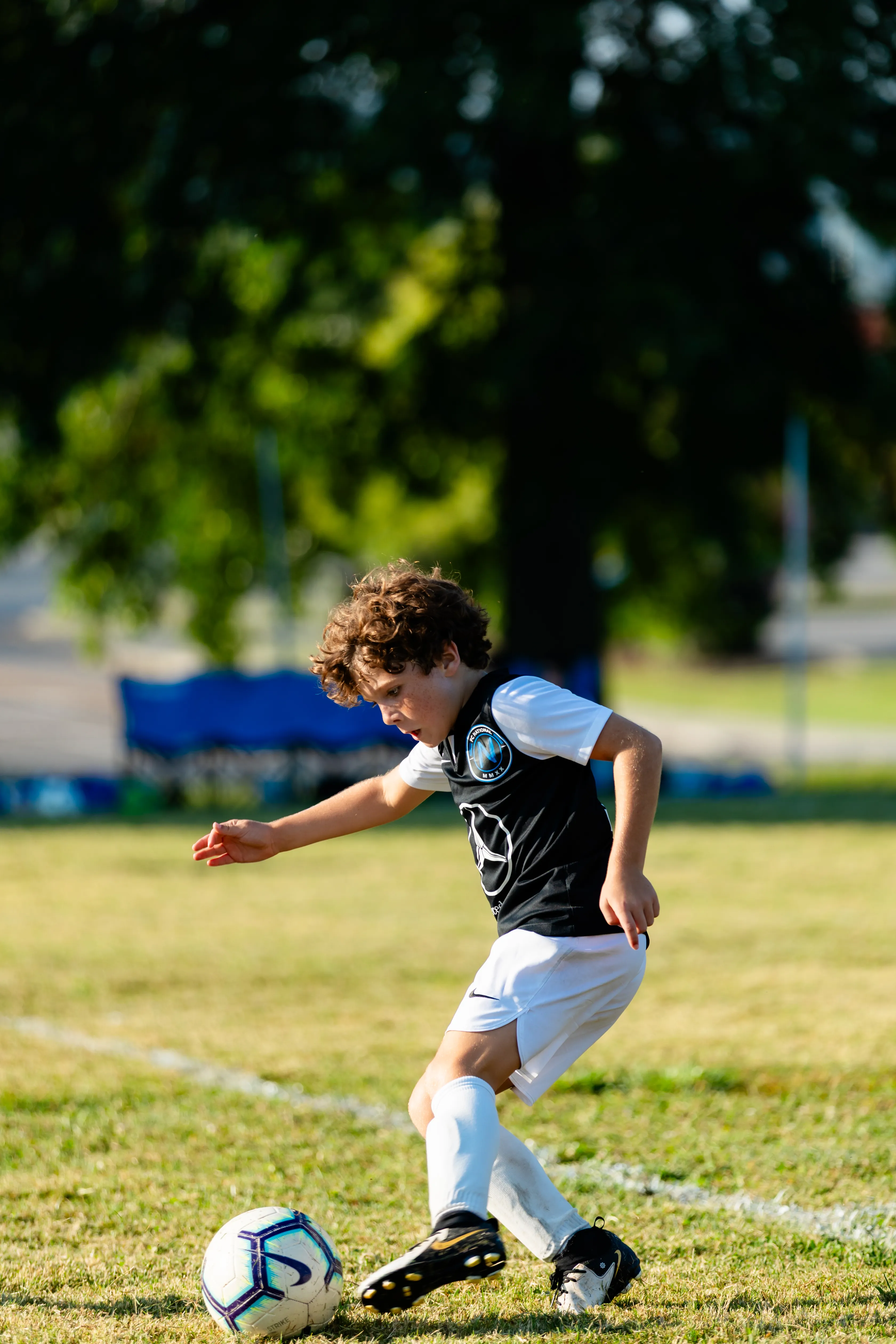
The best soccer drills for kids do not need a full field, a serious speech or a pile of equipment. They need a ball, a safe small space and one clear idea. Can the player take a softer first touch? Can they look up before a pass? Can they turn away from a marker and find the next action? Those are real soccer habits, and they can be practiced in short bursts without making an extra session feel like homework.
For families, the goal is not to turn the backyard into a professional academy. It is to give a young player more comfortable touches, more chances to make decisions and more confidence bringing those habits into training. Keep the tone light. Repeat a drill only while the player is engaged. A five-minute game that a child wants to do again is far more useful than a complicated plan they dread.
START WITH THE RIGHT KIND OF PRACTICE
Before choosing a drill, match it to the player in front of you. Younger players usually need a short game, a simple challenge and plenty of room to move. Older players can handle a little more detail, such as using the back foot to receive or checking a shoulder before a pass. In either case, a drill should have a clear soccer reason. Long lines and endless running may feel busy, but they do not give a player many chances to touch the ball or solve a problem.
FC National's development approach connects technical ability, game understanding, movement and mindset because those parts show up together in a real match. Use that same lens at home. A dribbling drill becomes more useful when the player has to look up. A passing drill becomes more useful when they move after the pass. A small game becomes more useful when everyone has a reason to support a teammate.
Keep safety simple. Use a clear space away from cars, glass and uneven ground. Choose comfortable, familiar footwear. Offer water in warm weather. If a player has pain, limps or seems unusually tired, stop and speak with an appropriate health professional before adding more activity. The American Academy of Pediatrics offers practical guidance on preventing overuse injuries in young athletes, including the importance of rest and varied activity.
1. BALL-MASTERY BOX
Make a small square with four cones, shoes or safe markers. Start with the player moving slowly inside the box, taking gentle inside touches with both feet. After 30 seconds, switch to outside touches. Then add sole rolls, where the player rolls the ball across the body with the bottom of the foot. The aim is not speed at first. It is keeping the ball close enough that the player can lift their eyes between touches.
Once the movement feels comfortable, call a direction or color. The player can turn toward that side while keeping control of the ball. This adds a small decision without changing the setup. If the ball repeatedly escapes the square, make the box larger. If it feels too easy, make the square slightly smaller or ask the player to use their less comfortable foot for one round.
This is a good opening drill because it gives players many touches without much waiting. It also teaches a useful habit: the ball should be close enough to control, but the player should not stare at it every second. That balance helps a young player feel calmer when the game gets faster.
2. PASS, RECEIVE AND MOVE
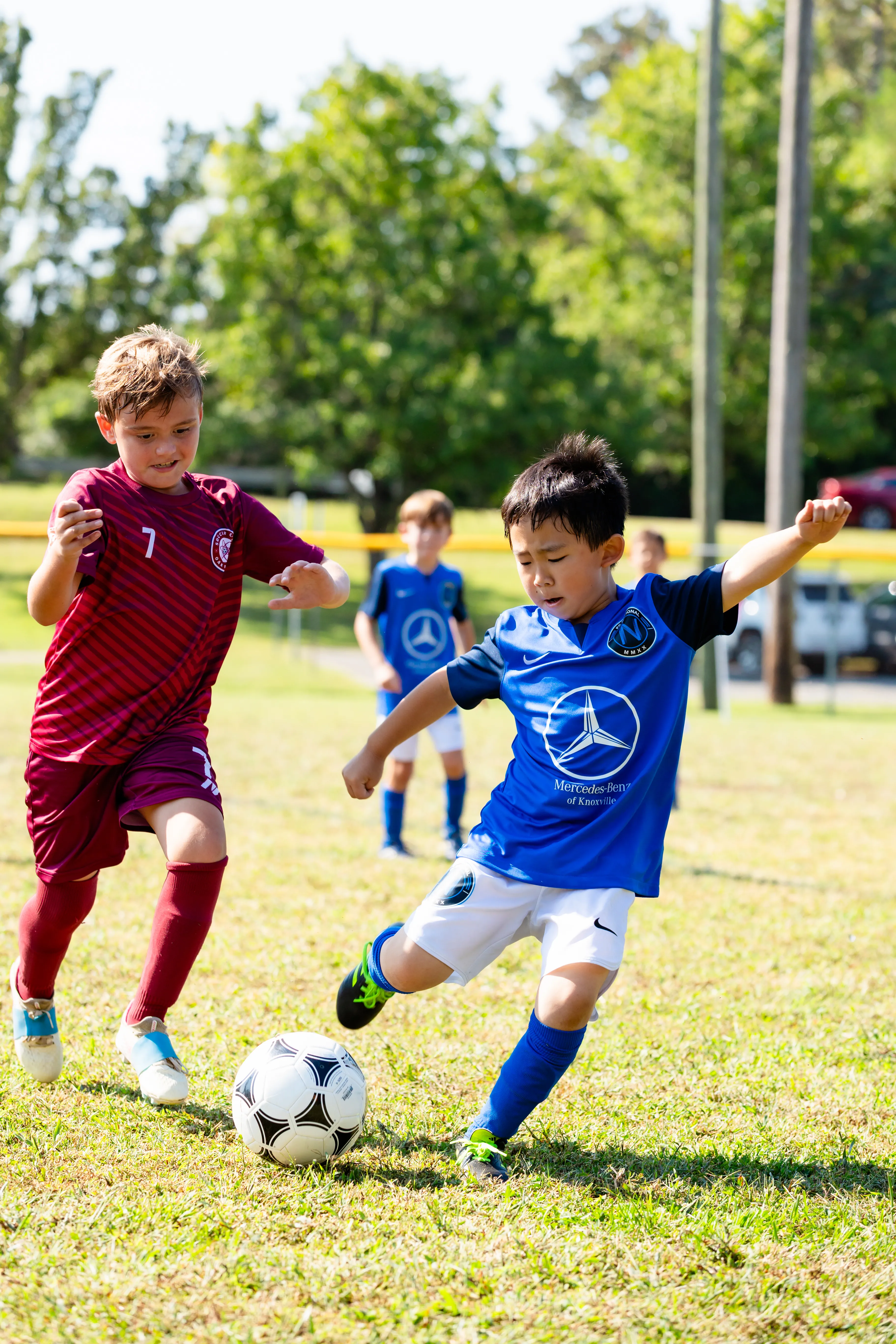
A wall or a partner is enough for this one. Set two markers five to eight yards apart. Pass with the inside of the foot, receive the return with a soft touch, then move a step or two before the next pass. Ask the player to use both feet over several rounds. The pass does not need to be hard. A ball played at the right weight and kept on the ground is more useful than a wild shot that sends everyone chasing.
With a partner, add a simple rule: after every pass, the player must move around one marker before becoming available again. This stops the drill from becoming a stationary exchange. It teaches the player that passing is not the end of an action. The next move creates another option for the teammate.
For a small challenge, have the partner call "left" or "right" before the ball arrives. The receiver checks that side, takes the first touch toward the open marker and plays the next pass. That tiny cue starts to build awareness. It also gives parents something helpful to praise: a clean touch, a look up or a good move after the pass.
3. FIRST-TOUCH GATES
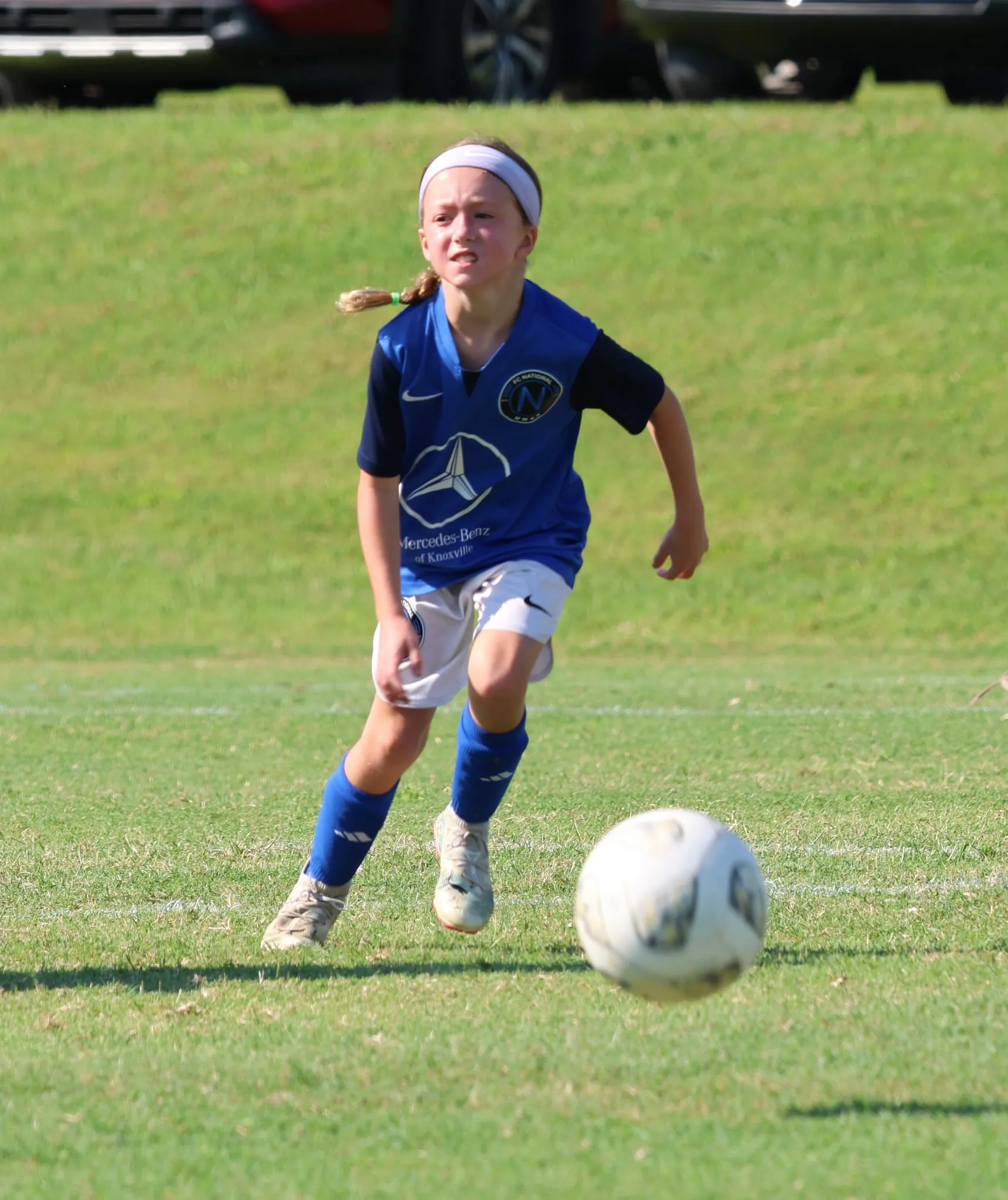
Set up two small gates, each made from two markers, a few yards apart. A partner passes the ball toward the player. Before receiving, the player looks up, chooses one gate and takes the first touch through it. Then they dribble a few steps and pass back. Switch sides so each foot gets a turn.
The drill is simple, but it answers an important game question: can the first touch create the next action? A player who lets the ball stop under their feet often has to solve the next problem late. A player who takes the ball into a little space has time to look, pass or dribble again. Begin with a slow, predictable pass. Add speed or a later cue only when the movement stays controlled.
Do not worry about a perfect technique label. At this age, it is more helpful for the player to feel the difference between a touch that traps them and a touch that gives them room. That feeling becomes useful in training, at a tryout and in a match.
4. TURN AWAY FROM THE CONE
Use one cone as a pretend defender. The player dribbles toward it, slows down, turns away and accelerates for a few steps into open space. Start with an inside cut or a simple pullback. The player does not need a long list of moves. They need one or two turns they can perform with balance and control.
Give the turn a reason. Tell the player the defender is closing from the left, so they should turn right. Or have a parent point to the safe exit just before the player reaches the cone. This keeps the drill connected to the game. A turn is not a trick to perform for its own sake. It is a way to protect the ball and find the next space.
Short rounds work best. Try four turns with the right foot, four with the left, then take a water break. The player should finish feeling quick and capable, not exhausted. Pair this drill with the soccer warm-up routine when they have been sitting in the car, at school or indoors before practice.
5. DRIBBLE, STOP AND GO
Place three or four markers in a loose line. The player dribbles forward, stops the ball under the sole at each marker, then changes direction or exits with a short burst after the final marker. The game can be as simple as "red light, green light," but use a ball every time. That turns a familiar childhood game into practice for control, balance and changing speed.
Ask the player to keep their knees soft and take small steps before stopping. A hard stop with the ball far in front makes the next move difficult. A controlled stop lets the player choose what comes next. If a sibling or friend is available, have one player call "go," "stop" or "turn" from a few yards away.
Movement matters in soccer, but it should stay connected to the ball. This drill is a simple way to work on both without turning a young player's extra practice into a running test.
6. FOUR-CORNER PASSING
Make a square with four markers and place one player at two opposite corners. Pass diagonally, follow the pass to the next corner and repeat. With three or four players, everyone moves to the space where the ball just came from. The pattern should be slow enough that players can see the ball, hear each other and receive with control.
After a few rounds, add one coaching point: call a teammate's name before the pass, receive with the back foot when there is room, or scan toward the next corner before the ball arrives. Pick only one. Too many reminders turn a useful game into a lecture. The point is to create a rhythm of pass, move, receive and play again.
This drill gives young players a feel for supporting angles. In a match, teammates are more useful when they move into a clear passing lane rather than standing behind a defender. A small square is enough to start seeing that idea.
7. 1V1 TO A GATE
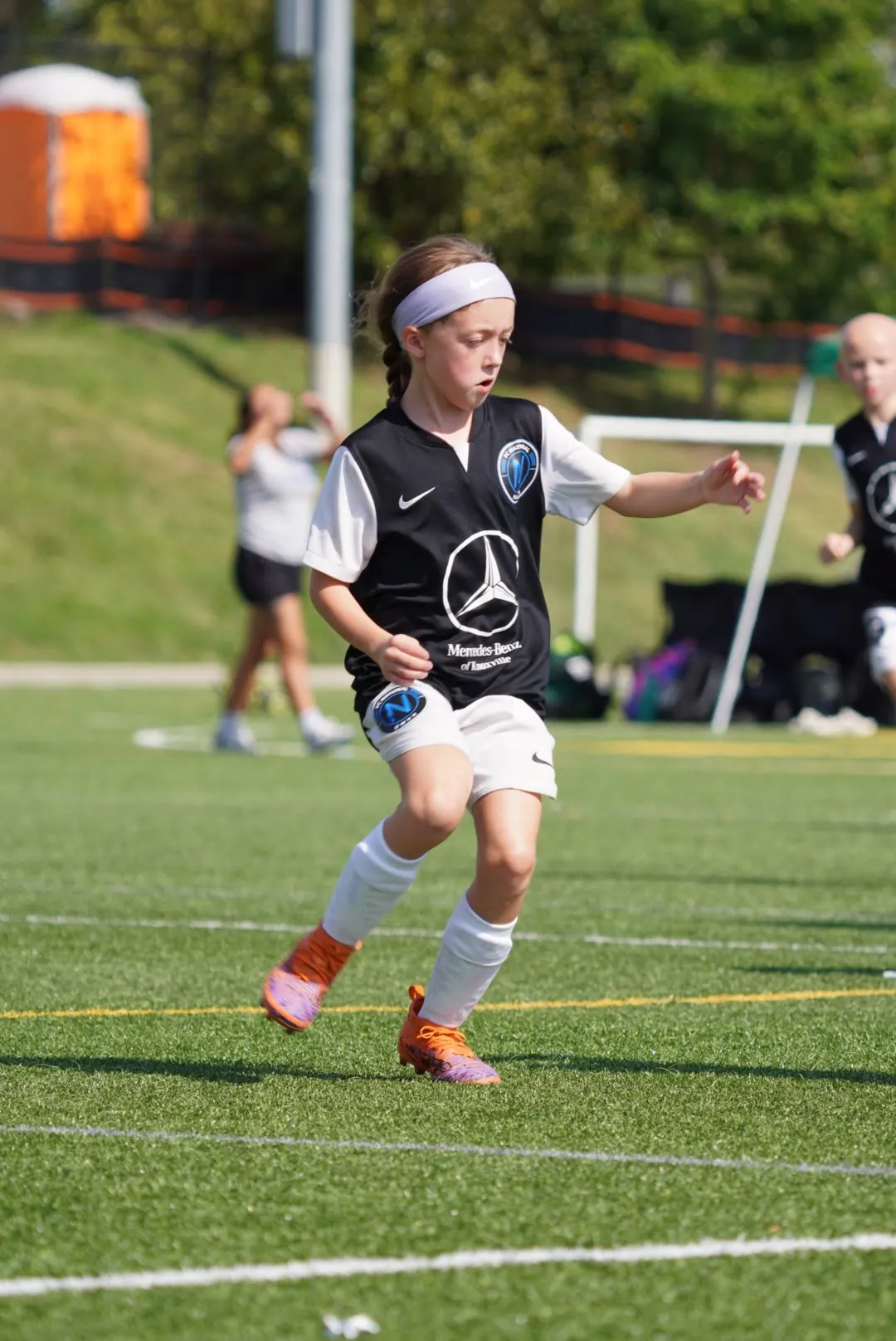
Set up a small rectangle and one scoring gate at each end. One player attacks, one defends. The attacker scores by dribbling through the far gate under control. Keep each round to 20 or 30 seconds, then switch roles. If the players are different ages or sizes, make the space larger for the younger player or give them a small head start.
The attacker works on changing direction, protecting the ball and recognizing when there is room to go. The defender works on closing the space with control, staying balanced and trying again after being beaten. Both roles matter. Soccer is full of moments when a player has to react after the ball changes hands.
Keep the score light. The goal is not to decide who is the best player in the yard. It is to give both children repeated, game-like problems to solve. Praise effort, a good recovery run or a smart turn as much as the goal itself.
8. PLAY A SMALL-SIDED GAME
A simple 2v2 or 3v3 game may be the most valuable drill on this list. Small-sided games mean more touches, more choices and more chances to work with teammates. Use two small goals, end zones or a pair of cones at each end. Keep the space modest so the ball stays involved, but large enough that players can dribble, pass and recover.
There is no need to stop play every minute. Let the children solve problems. After a short round, ask one simple question: Where did you find space? What helped you get the ball back? What could you try after your next pass? Questions encourage the player to notice the game rather than wait for an adult to provide every answer.
This is also a useful bridge into club training. FC National's teams and coaching environment are built around players learning how to compete, connect and make decisions with others. The backyard version does not need to copy a full practice. It only needs to preserve the part that matters: players thinking while they play.
MAKE PRACTICE SOMETHING A PLAYER WANTS TO REPEAT
Extra practice should add to a player's enjoyment, not compete with it. Finish before attention fades. Let the player choose one favorite drill to repeat next time. Keep a small challenge, such as ten clean passes with each foot or three controlled turns in a row, but do not make every session a test.
When a tryout is coming up, use these drills to sharpen familiar habits rather than cramming in something new. FC National's soccer tryout drills guide gives a more focused plan for the technical and game habits coaches see, while the soccer tryout tips guide helps families prepare for the day itself. A calm player with familiar tools is in a better place than a player trying to remember a dozen new moves.
Most importantly, let the player own more of the process over time. Parents can make the space safe, provide encouragement and help keep the routine realistic. The player can choose a challenge, notice what felt better and carry that confidence into the next training session.
A SIMPLE 25-MINUTE SOCCER PRACTICE
- Minutes 1 to 4: Use a light, active warm-up with easy movement and a few ball touches.
- Minutes 5 to 9: Play the ball-mastery box or dribble, stop and go game.
- Minutes 10 to 15: Practice passing, receiving and first touch with a wall or partner.
- Minutes 16 to 20: Add a turn, a small gate challenge or a short 1v1 round.
- Minutes 21 to 24: Finish with a small-sided game or a simple scoring challenge.
- Minute 25: Let the player name one thing that felt easier than it did at the start.
FC NATIONAL DEVELOPMENT
TURN EXTRA TOUCHES INTO BETTER GAME HABITS.
FC National gives ambitious young players a competitive setting to build skill, awareness, movement and confidence over time.
ASK ABOUT TRYOUTS →FREQUENTLY ASKED QUESTIONS
What are good soccer drills for kids to do at home?
Good at-home drills are simple and need very little space: close ball touches, passing against a wall, turns around a marker, short dribbles and small first-touch challenges. Choose a safe surface, keep the session short and stop before the player gets tired or frustrated.
How long should a soccer practice be for a child?
For many young players, 20 to 40 focused minutes is enough for an extra practice. The right length depends on age, attention, weather and the rest of the week. A shorter session with a clear purpose is usually more useful than a long session that becomes tiring or repetitive.
Do kids need lots of cones for soccer drills?
No. Four safe markers are enough for most basic drills, and a driveway line, water bottle or backpack can mark a space when appropriate. A ball, a little room and a willing partner are more useful than a complicated setup.
Should parents coach every soccer drill?
Parents can help by setting up the space, keeping the tone positive and asking a simple question such as what the player noticed. Avoid correcting every touch. Young players learn more when they can experiment, make a mistake and try the next action for themselves.
RELATED POSTS
 PLAYER GUIDE
Soccer Tryout Drills: 8 Ways to Practice With Purpose
Eight simple soccer tryout drills that help young players prepare their touch, decisions, movement and confidence.
 PLAYER GUIDE
Soccer Warm Up Drills for Young Players
A simple youth soccer warm-up routine that helps young players arrive ready to move, think and play with purpose.