
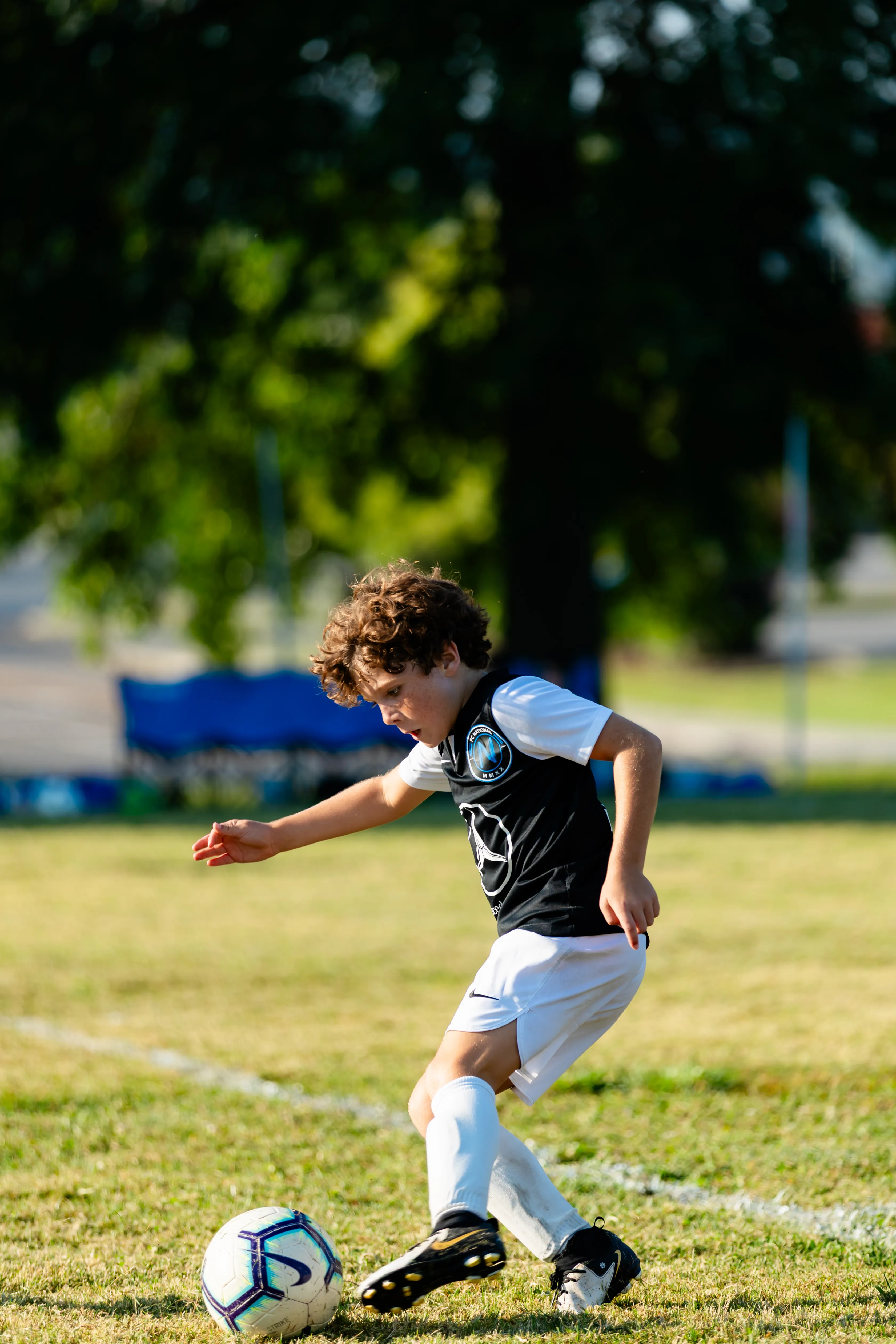
A good soccer warm-up does not need to look complicated. For a young player, it should make the first few minutes of training or a game feel less rushed: body temperature rises, feet start moving, attention shifts toward the field and the ball no longer feels like a surprise. The goal is not to tire a player out before the real work starts. It is to help them arrive ready to move, think and compete.
The strongest youth soccer warm-up drills are short, active and connected to the session ahead. A player may start with easy movement, add a few changes of direction, then use the ball and a teammate. That gives coaches a useful base for the technical and game decisions that follow. Parents do not need a perfect routine or a bag of special equipment. A little open space, a ball and a few markers are enough.
WHAT A SOCCER WARM-UP SHOULD DO
Before play, a warm-up has three practical jobs. First, it gets players moving through the actions they will use: running, stopping, changing direction, jumping and balancing. Second, it gives the player time to check in with their body. A stiff ankle, sore knee or unusual fatigue is easier to notice during a calm warm-up than in the middle of a full-speed game. Third, it brings the ball and teammates into the picture so the first pass or defensive action does not feel like the first touch of the day.
U.S. Soccer describes warm-up work as a chance to prepare the body and mind for training and competition. Its warm-up guidance emphasizes a gradual build from simple movement into sport-specific activity. That gradual build matters for young players. There is no benefit in turning the opening minutes into a fitness test or asking a player to copy an adult professional routine.
Think of the warm-up as a bridge. It helps a player move from school, a car ride or a busy family morning into a focused soccer environment. The player should finish feeling more alert and more comfortable, not breathless and depleted.
START WITH EASY MOVEMENT
Begin with two or three minutes of easy movement around a small area. Jogging is fine, but vary the pattern. Players can skip, move sideways, backpedal slowly and change direction when they reach a cone or line. The pace should be conversational at first. This is a chance to wake up the feet and hips, not race a teammate.
For a group, coaches can call simple actions every few seconds: forward jog, side shuffle, skip, open the gate, close the gate, or gentle backpedal. At home, a player can move between two markers or use the edges of a small yard. Keep the space clear and the movements controlled. If a player is struggling with balance or coordination, slow down rather than layering on more instructions.
Dynamic movement is a better first choice than holding a long stretch. The American Academy of Pediatrics notes that young athletes benefit from regular warm-up and cool-down habits as part of a sensible approach to physical activity. Its guidance on preventing overuse injuries also reinforces the broader point: preparation works best alongside appropriate rest and training load, not as a one-time fix before a match.
ADD MOBILITY WITHOUT TURNING IT INTO A STRETCHING CLASS
Once the player is moving easily, add a short mobility sequence. Walking lunges, gentle leg swings while holding a fence, knee hugs, heel-to-glute steps and ankle rolls can all work. Use eight to ten controlled repetitions, then move on. The aim is to explore range of motion and balance, not to force flexibility.
Players should be able to keep good posture through every movement. A lunge that collapses inward at the knee or a leg swing that turns into a wild kick is a sign to make the movement smaller. Quality is more useful than a high count. Younger players often respond well when the movement is given a playful cue: stay tall, land quietly, or show the coach a steady balance.
Any sharp pain, swelling, limping or change in normal movement deserves attention. Do not tell a young player to push through those signs to finish a warm-up. Let a coach know and seek appropriate medical advice when needed. A warm-up should help players notice what is going on, not teach them to ignore it.

USE SHORT ACCELERATIONS AND SIMPLE DIRECTION CHANGES
Soccer asks players to start, stop and turn often. After easy movement and mobility, add a few short accelerations. Set two cones about 10 to 15 yards apart. Build speed gradually over the first few yards, then slow down with control. Walk back and repeat two or three times. The player should finish each run feeling quick and coordinated, not gasping for air.
Next, add a change of direction. A simple square of four cones works well. Jog to the first cone, shuffle to the second, backpedal to the third, then jog forward to the start. After one or two easy rounds, have the player plant and turn at each cone. Keep the knees soft and encourage small, controlled steps before the turn. This teaches the body to slow down before it asks to go again.
U.S. Soccer has explored youth injury-prevention programs that use movement quality, balance, strength and landing mechanics as part of regular preparation. Its overview of injury-prevention work in youth soccer is a useful reminder that the details matter. A player does not need a complicated routine, but repeating controlled movements over time can build better habits than jumping straight from the car to a full-speed scrimmage.
BRING THE BALL INTO THE WARM-UP
Once the player is warm, use the ball. Start with simple touches in a small grid: inside touches, outside touches, sole rolls and gentle turns. Ask the player to keep the ball close enough that they can look up every few seconds. The point is not to race through a cone course. It is to reconnect touch, posture and awareness before pressure arrives.
A partner adds even more value. Stand five to eight yards apart, pass along the ground, receive with the back foot when possible and move one or two steps after the pass. Switch feet and vary the angle. The pair can also add a simple call before the ball arrives, such as "turn," "set" or "back." That begins to bring communication and decision-making into a low-pressure setting.
FC National's player development approach brings technical ability, game understanding, movement and mindset together. A ball-based warm-up reflects that approach. It is not just about loosening up. It gives players early repetitions of scanning, receiving, moving and connecting with teammates.

FINISH WITH A SMALL GAME-READY ACTIVITY
The final part of the warm-up should resemble the game without becoming a full workout. Try a two-minute passing pattern, a short 1v1 round, a keep-away game or a 3v3 possession activity. Keep the rules simple and the space appropriate for the age group. Players should get touches, make choices and hear one another, then be ready to step into the main session.
For a player warming up before a tryout, this is especially useful. The first few minutes can be nervous, and a simple ball activity gives the player something familiar to focus on. The goal is not to prove every skill before the evaluation begins. It is to arrive organized and calm. FC National's soccer tryout tips guide covers the broader preparation that helps a young player settle into that day.
Coaches can also use this part of the warm-up to set the tone. Ask for clear communication, quick resets after a mistake and attention to the next action. Those habits carry directly into the session. A warm-up feels more purposeful when players understand why the activity is there.
ADJUST FOR WEATHER, AGE AND THE DAY AHEAD
A January evening, an August tournament and an indoor training session should not feel identical. Cold conditions may call for a slightly longer easy-movement phase and an extra layer until the player is active. Hot weather calls for a calmer pace, shade and regular water breaks. The American Academy of Pediatrics advises families to pay close attention to hydration and warning signs during heat exposure. Its heat-illness guidance for young athletes is worth reviewing before a hot-weather event.
Age also matters. Younger players need less explanation and more simple movement. A short tag game with a ball may be more productive than a long sequence of drills. Older players can handle more detail, including body position, scanning and controlled deceleration. In every age group, the player should understand the basic goal: move well, get touches and feel ready.
Finally, match the warm-up to the work ahead. A session built around passing should finish with passing. A training night with lots of defending can include a few controlled closes and turns. The warm-up does not have to rehearse the full practice. It just needs to prepare the player for the kinds of movements and decisions that are coming.
MAKE THE ROUTINE EASY TO REPEAT
The most useful warm-up is the one a team can repeat without confusion. Coaches do not need to reinvent it every Tuesday, and parents do not need to direct every minute from the sideline. Pick a few movements that suit the age group, keep the order familiar and make small changes when the session calls for them. Familiarity helps players settle quickly, especially when they are joining a new group or arriving after a long school day.
For players practicing at home, a simple routine also removes the pressure to train like a professional. A few minutes of movement, several short runs and ten clean passes with a parent or sibling are enough to make the next training session feel more comfortable. When time is tight, keep the ball work and skip the complicated extras. Consistency will help more than an occasional intense routine.
Parents can support the habit by helping players arrive with enough time to move, a filled water bottle and the right gear. Then step back. The player should learn to take ownership of their preparation, notice how they feel and ask for help when something does not seem right. That kind of steady independence is valuable well beyond the warm-up.
A 12-MINUTE SOCCER WARM-UP ROUTINE
- Minutes 1 to 3: easy jogging, skipping, side shuffles and backpedals in a clear space.
- Minutes 4 to 5: controlled lunges, knee hugs, ankle rolls and gentle leg swings.
- Minutes 6 to 7: two or three short accelerations, building speed gradually and slowing down under control.
- Minutes 8 to 9: changes of direction around a square or through a small set of markers.
- Minutes 10 to 11: close ball touches, turns and short passes with a partner.
- Minute 12: a small possession game, passing pattern or simple 1v1 activity that leads into the session.
This routine is a starting point, not a rulebook. Make it shorter for a younger group, longer in cold conditions or more specific for a particular session. The best test is simple: after the warm-up, can the player move comfortably, take a useful first touch and pay attention to the game?
FC NATIONAL DEVELOPMENT
BUILD HABITS THAT SHOW UP IN THE GAME.
Purposeful preparation matters, but it is only one part of player development. FC National gives young players a competitive environment to build skill, awareness and confidence over time.
ASK ABOUT TRYOUTS →FREQUENTLY ASKED QUESTIONS
How long should a youth soccer warm-up be?
Most young players need roughly 10 to 15 purposeful minutes before training or a game. The exact time changes with the weather, age group, travel and how active the player has already been, but the aim is to feel prepared, not worn out before the session begins.
What are good soccer warm-up drills for kids?
Good drills are simple, active and easy to repeat: light jogging, skipping, side shuffles, short accelerations, bodyweight movement, ball touches and short passes. The best choice matches the session that follows and gives players a chance to move with control.
Should young soccer players stretch before a game?
Use movement first. Walking lunges, leg swings, skips and controlled changes of direction are usually more useful before play than long held stretches. Save longer relaxed stretching for another time, and speak with a qualified health professional about any pain or injury.
Can a warm-up prevent every soccer injury?
No. A warm-up cannot remove every risk in a fast, contact sport. It can help players arrive more ready to move and may support safer habits, especially when it is consistent, age-appropriate and paired with sensible training, rest, hydration and attention to pain.
RELATED POSTS
 PLAYER GUIDE
Soccer Tryout Drills: 8 Ways to Practice With Purpose
Eight simple soccer tryout drills that help young players prepare their touch, decisions, movement and confidence.
 PARENT GUIDE
How Soccer Tryouts Work: What Parents Can Expect
A parent guide to youth soccer tryouts, from check-in and drills to coach decisions, follow-up and the questions worth asking.