
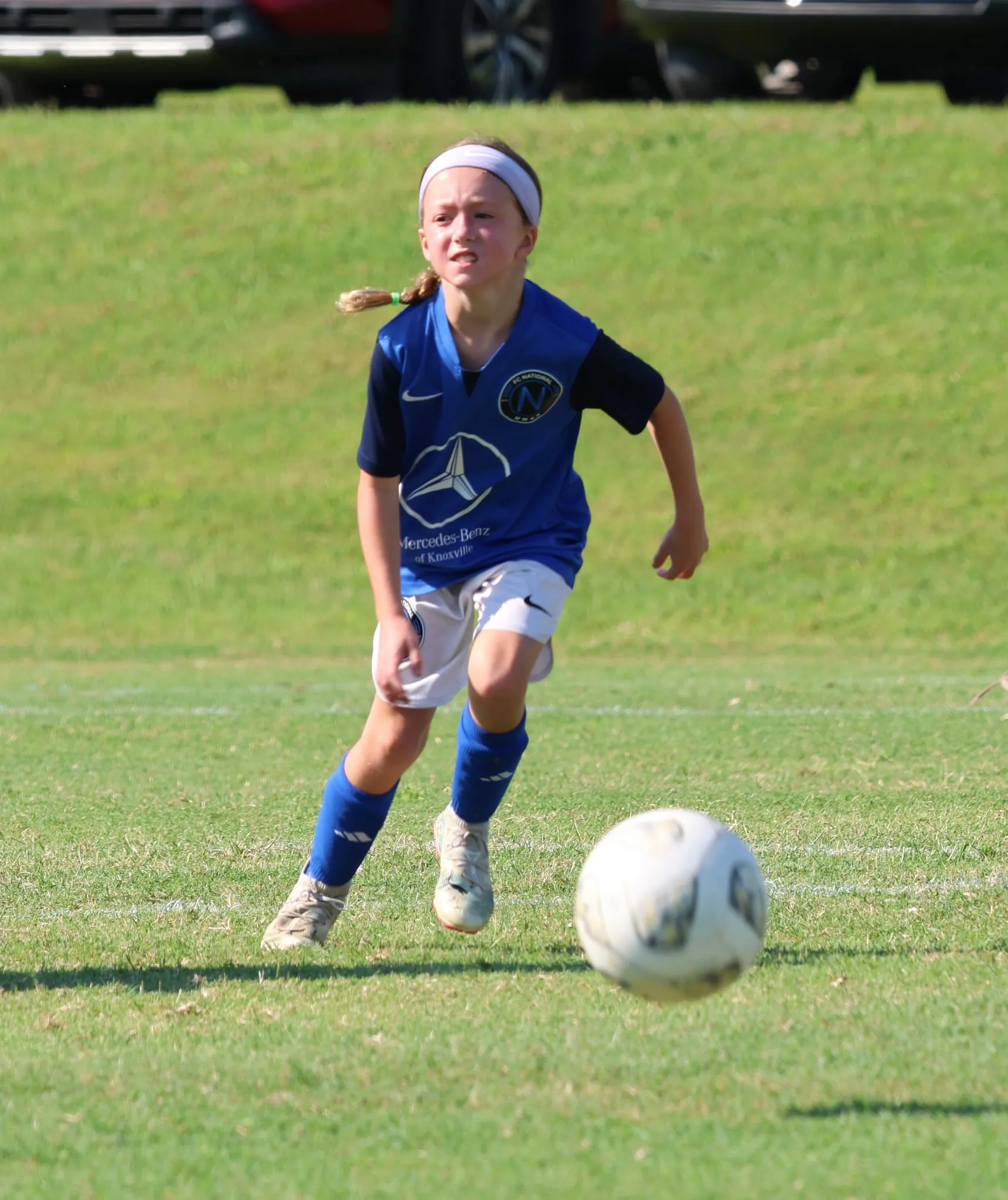
At five, a good soccer practice does not look like a grown-up training session made smaller. It looks like play with a ball. Players need room to run, a simple challenge they can understand and lots of chances to start again. The goal is not to create a tiny tactician. It is to help a child feel comfortable moving, trying and enjoying the ball at their feet.
These soccer drills for 5 year olds work at home, in a small backyard or with a group of young players. Use cones, shoes or water bottles as markers. Keep the activity short, show it once, then let the children play. If a game is working, repeat it. If it is not, make it easier or move on without turning the moment into a correction.
WHAT A FIVE-YEAR-OLD NEEDS FROM SOCCER
U.S. Soccer's U6 guidance puts the emphasis on dribbling, running with the ball, receiving, shooting, movement skills and small-sided games. It also recommends short instructions, simple feedback, regular breaks and learning through play. That is a much better guide than trying to teach formations, lengthy passing patterns or a list of technical details.
Start with one ball per child whenever you can. Waiting in a long line means fewer touches and less fun. Give the group one clear rule, such as “keep your ball close,” and one clear success, such as “can you stop it before the cone?” Praise effort, curiosity and a player who tries again after the ball rolls away.
A five-year-old does not need to master every soccer skill. They need repeated friendly experiences with the ball. The games below build dribbling, stopping, turning, striking and simple decision-making without asking young players to be older than they are.
1. RED LIGHT, GREEN LIGHT
Give every player a ball inside a small, open grid. On “green light,” players dribble around the space. On “red light,” they stop the ball with the sole of a foot. Add “yellow light” for tiny touches in place, then “reverse” for a gentle turn and dribble the other way.
This game teaches close control without making it feel technical. The player has to listen, move the ball and slow it down, all while keeping their head up enough to avoid other children. Start slowly. A player who needs to use their hands to stop the ball can do that at first, then gradually try a foot stop.
Keep everyone in. There is no need to eliminate a player who moves after the call. Simply smile, reset and play the next round. A five-year-old who is engaged gets more from another touch than from standing at the side watching.
2. CLEAN YOUR ROOM
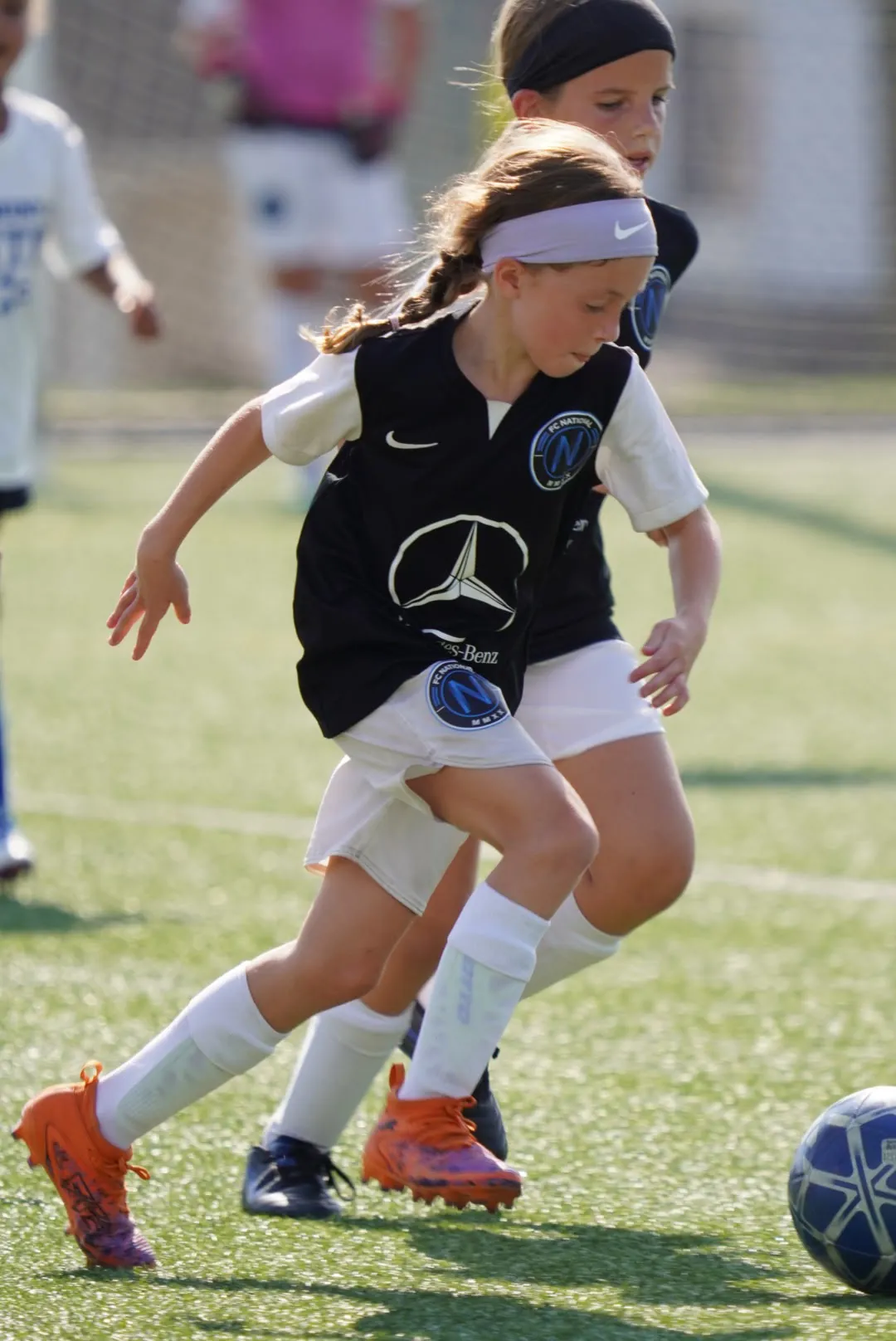
Make two small areas side by side with a line of cones between them. Split the players into two groups, with several balls spread around both spaces. On the signal, players dribble or kick one ball at a time into the other team's area. After a short round, pause and count how many balls are in each space.
The game creates a reason to strike the ball while keeping the mood light. Players learn that a softer touch keeps a ball close, while a stronger kick sends it farther. Do not worry about perfect form. You can offer one simple cue, such as “look where you want the ball to go,” then let the game do the teaching.
For a quieter version at home, one child can move balls from one “room” to another before a parent counts to ten. For a larger group, use more than one grid so every player stays active. The win is not the score. The win is a child who wants one more round.
3. TREASURE HUNT
Put cones, pinnies or safe household objects in the middle of the grid as “treasure.” Each player starts at an outside cone with a ball. They dribble to the middle, collect one item and return it to their home base. If carrying an item while dribbling is too hard, let players park their ball, collect the treasure, then dribble home.
Treasure Hunt gives young players a reason to turn, protect the ball and choose a route around others. Keep the story simple. Maybe the treasure needs to be rescued from a dragon, or maybe every player is building a collection for their team. A little imagination often gets more repeated effort than a detailed explanation ever will.
Make the game easier by spreading the items out. Make it harder by asking players to use the other foot on the way back, or by placing a parent or coach in the middle as a gentle “dragon” who tries to tap, not steal, a ball. Keep the adult slow enough that players succeed often.
4. ANIMAL MOVES WITH A BALL
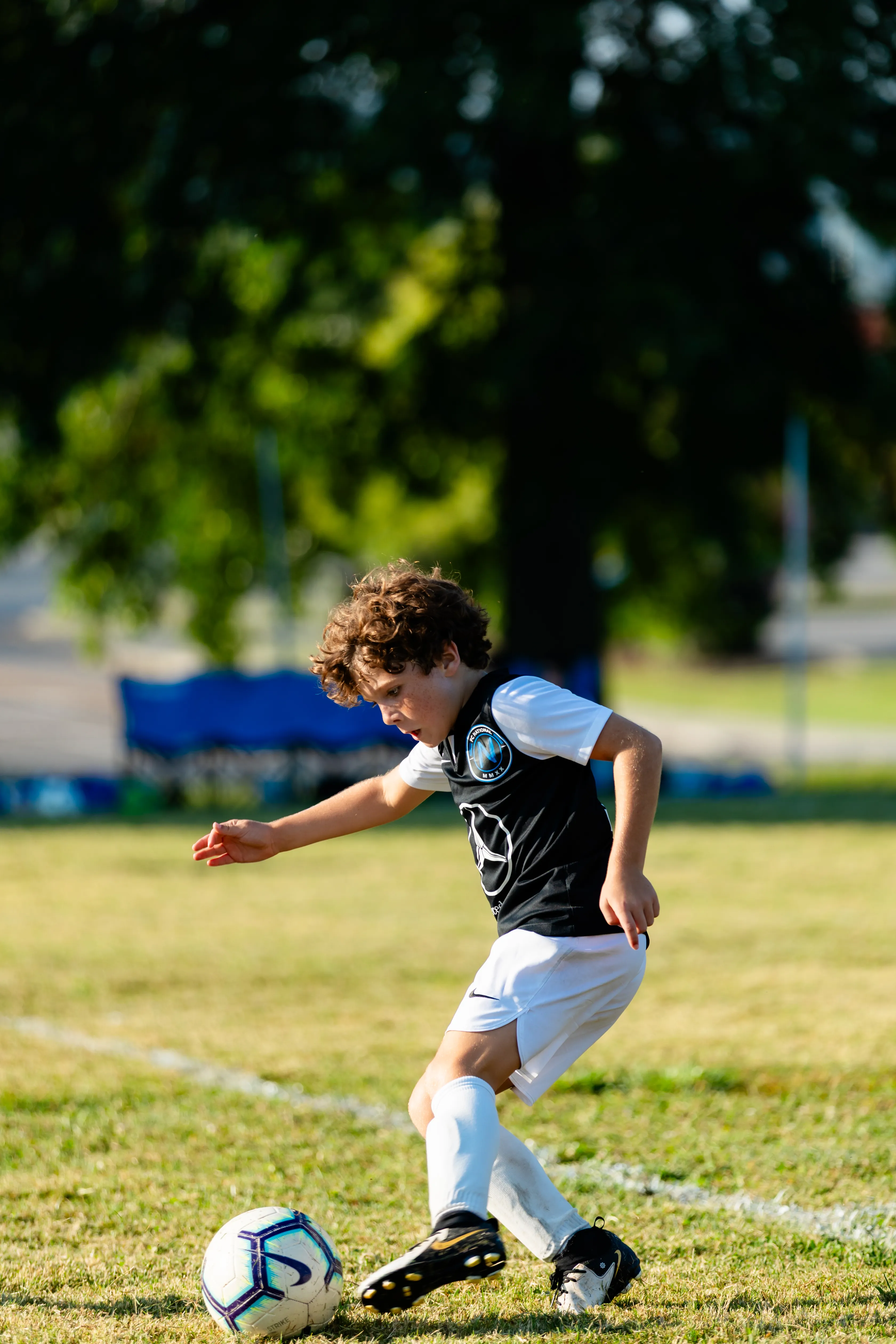
Call out an animal and give players a movement to copy with their ball nearby. Penguins take tiny dribbling steps. Cheetahs take a few faster touches into open space. Crabs move sideways around a cone. Frogs jump over a flat marker, then find the ball again. The names are less important than the variety.
This game connects soccer with the movement skills children are still learning: running, stopping, hopping, jumping and changing direction. U.S. Soccer includes those fundamental movements in its U6 guidance because young players benefit from becoming comfortable in their bodies, not only from striking a ball.
Choose two or three animals, not ten. Show each move once, let the players try it, then change before attention fades. If a child creates a new animal move, use it. Giving players a small choice makes them part of the game and helps the activity feel like theirs.
5. GATES AND GETAWAYS
Set out several small cone gates around the area. Each player dribbles through as many gates as they can, then turns and finds another. There is no need to keep a serious score. You can ask players to call out a color, high-five a parent after three gates or see whether they can use both feet.
The point is to create lots of simple turns and lots of choices. A player who sees an open gate, dribbles toward it and changes direction when another player arrives is already practicing useful soccer awareness. The activity also scales easily. Make gates wider for a beginner, narrower for a child who is ready, or use one larger gate as a goal to dribble through.
Use this near the beginning of a session as a gentle way to get moving. Families can also pair it with the club's youth soccer warm-up ideas when an older sibling or a mixed-age group needs a little more movement before a game.
6. COACH, CAN I SCORE?
Set up one small goal, two cones or a safe target. Each player starts a few steps away with a ball. They ask, “Coach, can I score?” The adult gives a playful instruction: “Take two tiny touches,” “turn around once,” or “use your right foot.” Then the player dribbles or kicks toward the target.
Scoring is exciting, and this game keeps that feeling while adding a tiny decision before the shot. Keep the distances short enough that children can reach the target successfully. A five-year-old who misses should get another ball straight away, not a lecture on their technique.
For a group, run two targets side by side so no line gets long. For home practice, a laundry basket, an open gate or two shoes can be enough. If there is no safe shooting area, ask the player to stop their ball on a line instead. The same success pattern applies: move, choose, finish and celebrate the effort.
7. 2V2 TO SMALL GOALS
Finish with a small game. Two players against two is plenty. Use small goals or cone gates, skip assigned positions and roll another ball in quickly when one leaves the area. Let players chase, dribble, score and solve the moment. The game will look crowded at times, and that is normal.
Small-sided play gives every child more involvement than a large match. It creates natural chances to run with the ball, help a teammate and recover after losing it. U.S. Soccer's U6 guide includes 1v1, 2v1 and 2v2 games, while also advising against set playing positions. That combination keeps the game close to the players and leaves room for their own choices.
Resist the urge to stop play every few seconds. Try one short encouragement, such as “find space,” then watch. At this age, the game itself is a teacher. The last few minutes should feel like soccer, not like a test.
A SIMPLE 35-MINUTE U6 SESSION
- Minutes 1 to 5: Let every player explore with a ball in the space.
- Minutes 6 to 10: Play Red Light, Green Light.
- Minutes 11 to 15: Play Clean Your Room.
- Minutes 16 to 21: Run Treasure Hunt or Animal Moves.
- Minutes 22 to 27: Add Gates and Getaways or Coach, Can I Score?
- Minutes 28 to 35: Finish with a small game and a simple, positive send-off.
Adapt the clock to the group. If players are laughing and focused in one game, stay there longer. If energy drops, take a drink break or switch sooner. Young children do not need to leave exhausted for practice to be useful. They need to leave feeling capable and ready to play again.
HOW FC NATIONAL SUPPORTS EARLY DEVELOPMENT
FC National's approach to player development brings technical skill, movement, game understanding and mindset together over time. For young players, that starts with a positive environment where they can move, explore and build confidence before anyone expects them to have all the answers.
Families who want to understand the club's pathway can explore FC National teams, meet the coaching staff and review current tryout information. The best next step depends on the player's age, experience and current fit, not on rushing them into a role before they are ready.
FC NATIONAL DEVELOPMENT
LET THEM PLAY. HELP THEM GROW.
FC National gives ambitious young players a competitive environment built around purposeful training, patient coaching and long-term development.
ASK ABOUT TRYOUTS →FREQUENTLY ASKED QUESTIONS
How long should soccer practice be for a 5 year old?
A short, active session is usually more useful than a long one. Plan roughly 30 to 45 minutes, use several small games and allow a water break when conditions call for it. Finish while the child is still enjoying the game.
What soccer skills should a 5 year old practice?
Focus on moving with the ball, stopping it, changing direction, kicking it toward a target, running, hopping and playing simple small-sided games. At this age, comfort and confidence matter more than perfect technique or positions.
Do 5 year olds need soccer drills at home?
A few playful minutes in a safe space can be useful, but structured daily training is not necessary. Let the child choose a game, use a soft ball where appropriate and stop before it becomes a chore.
Should 5 year olds play positions in soccer?
No. Young players benefit more from following the game, taking turns and trying different actions than from being told to stay in one place. U.S. Soccer's U6 guidance specifically advises against set playing positions.
RELATED POSTS
 PLAYER GUIDE
Soccer Drills for 6 Year Olds: 7 Fun Games
Seven fun soccer drills for 6 year olds that build ball comfort, coordination and confidence through simple games.
PLAYER GUIDESoccer Drills for Kids: 8 Fun Ways to Build Skills
Eight simple soccer drills for kids that build touch, passing, movement, awareness and confidence without turning practice into a chore.