

Seven is a great age for soccer. Players are ready for more choices than they were at five or six, yet they still learn best when the ball is close, the instructions are short and the game feels like a game. A useful session does not need elaborate equipment or a coach shouting every answer. It needs movement, touches, friendly competition and enough freedom for players to notice what works.
These soccer drills for 7 year olds build the skills that start to matter more in real games: keeping the ball under control, looking up, passing with a partner, turning away from pressure and moving after a pass. Use cones, shoes or water bottles for markers. Keep the groups small, demonstrate once, then let the children solve the challenge. If an activity loses energy, change the rule or move to the next game.
WHAT A SEVEN-YEAR-OLD NEEDS FROM SOCCER
At this stage, players do not need a complicated playbook. They need many chances to work with the ball and recognise simple moments in a game. U.S. Soccer's U8 guidance highlights dribbling, receiving, passing, shooting, decision-making and small-sided games. It also values a player's curiosity, confidence and willingness to try again, not only whether a move looks polished the first time.
Set up activities so waiting is rare. Give each child a ball for individual games. Use two or three small grids instead of one long line. When players work in pairs, keep the distance close enough that passes succeed. Success creates more useful repetitions. A player who has the ball forty times in a session will learn far more than one who stands behind a cone for ten minutes waiting for a turn.
Offer one coaching point at a time. “Soft touches.” “Look up.” “Pass and move.” Those reminders are easier for a seven-year-old to use than a long explanation. Praise the brave choice, the quick recovery and the teammate who notices someone open. Those habits will matter just as much as a fancy dribble as the game becomes faster.
1. TRAFFIC LIGHT TURNS
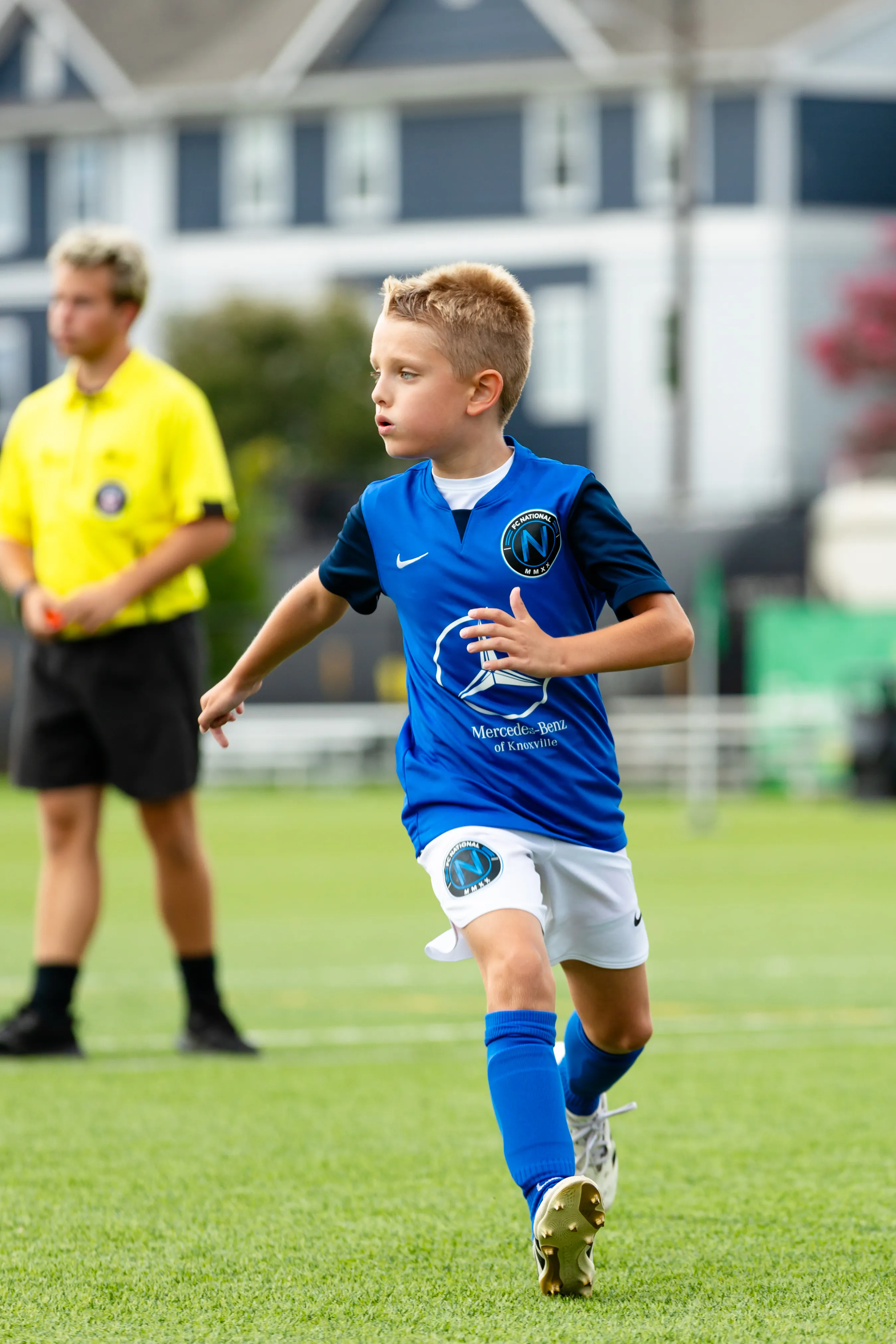
Make a medium-sized grid and give every player a ball. On green, players dribble into open space. On yellow, they use tiny touches and keep the ball close. On red, they stop the ball with the sole of their foot. Add a colour or a number to call the kind of turn: blue can mean a pullback, while one can mean turning around a nearby cone.
This game works because players have to change speed, listen and protect their space without thinking about a technical lecture. Encourage them to lift their eyes between touches so they can avoid traffic. At first, the turn can be any turn that keeps the ball nearby. As they settle in, ask them to use the inside of the foot one round and the outside the next.
Keep everyone moving. If a player reacts late, let them take one extra small touch and rejoin immediately. Eliminating players is an easy way to create an audience. The goal is more touches and more confidence, not finding a winner before the game has really started.
2. GATES AND GEARS
Scatter cone gates around the area, each about two steps wide. Players dribble through as many gates as they can, then find a new one. When you call “first gear,” they use slow close touches. “Second gear” asks for a slightly longer touch into a new space. “Brake” means stop the ball, look up and choose the next gate.
Gates and Gears helps a player learn that the right touch changes with the space around them. A slow touch helps near a gate or another player. A longer touch can help them escape into an open lane. Rather than explaining every detail, let them experience what happens when the ball gets too far away, then invite them to try again with a different touch.
For a small group, ask players to count their own gates for thirty seconds. For a bigger group, give each colour of gate a different point value, but avoid making the score the whole point. The player who stops, scans and chooses a safer next gate is doing exactly the kind of thinking that carries into a match.
3. PARTNER PASS AND FOLLOW
Put players in pairs about six to eight steps apart, with one ball between them. Player A passes to Player B, then follows the pass to take B's place. Player B receives, passes back and follows their own pass. Once the group can keep it moving, create a simple triangle with three players so they have to see a new target after every pass.
Start close. A firm, accurate pass over a short distance gives players the chance to receive successfully and prepare the next action. Remind them that a pass is easier to control when it arrives on the ground and at a helpful speed. The receiver can use the inside of the foot to cushion the ball, then make the next pass without rushing.
Following the pass is the important extra. Young players often admire their pass and stay still. This activity turns passing into a moving habit: give the ball, find a new angle and be ready again. You can link it to FC National's broader soccer drills for kids when a player is ready for more variations on passing and movement.
4. 1V1 SHIELD AND ESCAPE
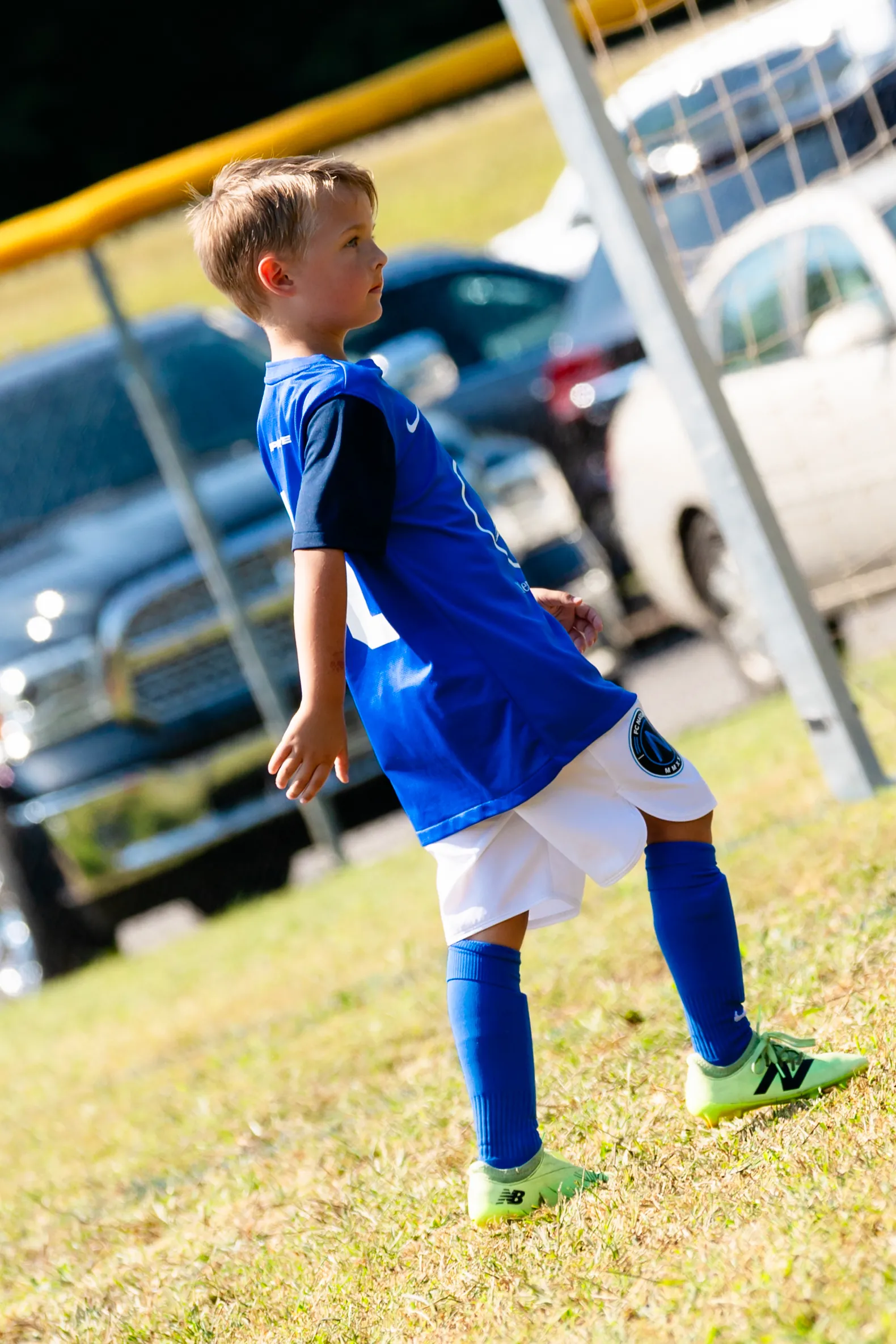
Make several small channels. One player starts with the ball and another begins a few steps behind or to the side. The player with the ball tries to dribble through the far gate. The defender applies gentle pressure and tries to win the ball fairly. Give each round fifteen to twenty seconds, then switch roles.
Seven-year-olds do not need to learn every shielding technique in one afternoon. This game gives them the feeling of putting their body between the ball and pressure, taking a touch away from a defender and changing direction when the route is blocked. Tell the defender to challenge with control, not to crash into the player. The best learning happens when both children feel safe enough to try again.
Make it easier by giving the attacker a larger channel or a head start. Make it harder by shrinking the space or asking the attacker to score in either of two gates. Praise the player who keeps trying a turn after losing the ball. A clean recovery after a mistake is as useful as getting past the defender on the first try.
5. FOUR-GOAL FINDER
Set up a square with a small cone goal on each side. Play 2v2 or 3v3. A team can score in any goal, but it cannot score in the same goal twice in a row. That one rule makes players look around, turn when a route is blocked and begin to see that the ball can move away from pressure.
Keep the teams small enough that every player is involved. Small-sided games naturally create more dribbles, passes, defending moments and chances to restart after the ball rolls out. Roll a new ball in quickly and resist stopping every play. Let the game reveal what the group needs, then give one short reminder during a break.
When a player does not have the ball, ask a simple question: “Where can you help?” That might mean moving wide, getting behind the ball or finding a passing angle. They do not need a perfect tactical answer. They need to begin noticing that their movement can help a teammate.
6. FINISH THE COLOUR
Set up two small goals or targets and place a different coloured cone beside each one. A player dribbles from a starting cone while a parent or coach calls a colour. The player takes a controlled touch toward that target and finishes. Once the group has the idea, call the colour later, so they have to dribble with their head up before deciding.
This drill adds a simple decision to shooting. Players cannot simply run at the same goal every time. They have to listen, look and adjust their approach. Keep the target close enough that the player can strike with purpose. A small goal, two cones, a wall target or a laundry basket in a safe home space can all work.
Invite players to use either foot, but do not turn the weaker foot into a test. A player who takes a calm first touch and strikes at the correct target has completed the real job. Celebrate the decision first, then offer a simple cue, such as planting the non-kicking foot beside the ball, if the player is ready to hear it.
7. 3V3 END-ZONE GAME
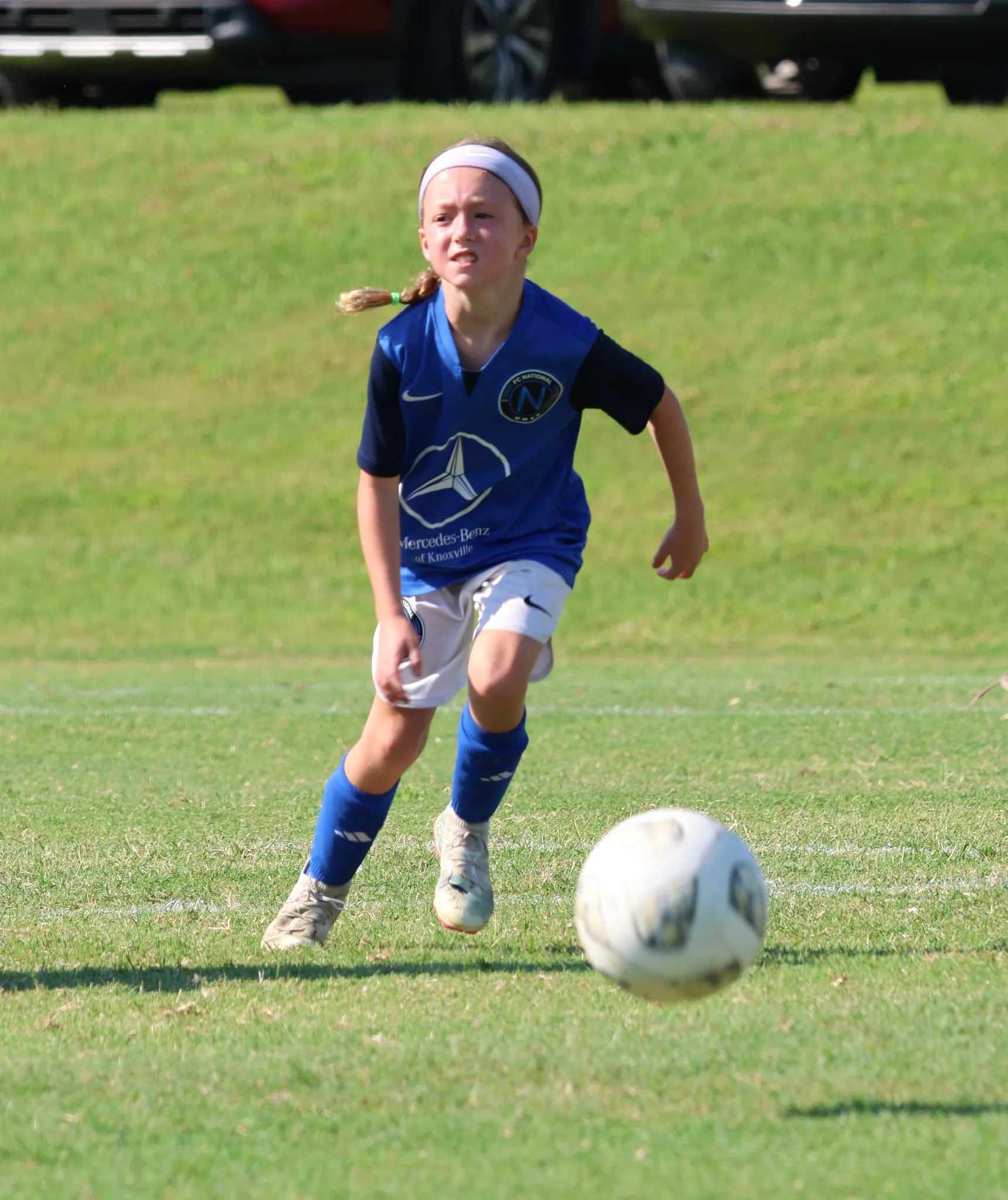
Finish with a game that looks and feels like soccer. In a small rectangle, play 3v3 and mark a narrow end zone at each end. A team scores by dribbling under control into the far end zone. There are no fixed positions. Players can attack, defend, swap roles and make choices as the game changes.
An end zone encourages players to carry the ball forward while still leaving room for a pass. It also takes some pressure off a single goalkeeper or a hard shot. If the game becomes crowded, make the field a little wider. If players are dribbling too easily with no opposition, narrow it slightly. The right space creates useful decisions without demanding a complicated setup.
End on a positive note. Ask each player to name one moment they enjoyed, or highlight a specific action you saw: a brave turn, a useful pass, a fast recovery or an encouraging word. Seven-year-olds remember how soccer felt. A session that feels challenging and enjoyable makes them more likely to keep practicing, playing and growing.
A SIMPLE 50-MINUTE SESSION
- Minutes 1 to 7: Let players explore with a ball, then start Traffic Light Turns.
- Minutes 8 to 15: Play Gates and Gears, with short water breaks if needed.
- Minutes 16 to 24: Use Partner Pass and Follow.
- Minutes 25 to 32: Run 1v1 Shield and Escape.
- Minutes 33 to 40: Play Four-Goal Finder or Finish the Colour.
- Minutes 41 to 50: Finish with the 3v3 End-Zone Game and a positive send-off.
The clock is a guide, not a rule. Stay longer with a game that has the group engaged. Shorten an activity when attention fades. The best session gives players a challenge they can solve, enough repetition to improve and a small-sided game where they can use what they just practiced.
HOW FC NATIONAL SUPPORTS PLAYER DEVELOPMENT
FC National's player development approach brings technical skill, game understanding, movement and mindset together over time. For younger players, that means a positive environment where learning is active, mistakes are part of the process and every player has room to become more confident with the ball.
Families can explore FC National teams, meet the coaching staff and review current tryout information when they are considering the next step. The right fit depends on a player's age, experience and enjoyment of the game, not a rush to specialise too early.
FC NATIONAL DEVELOPMENT
LET THEM PLAY. HELP THEM GROW.
FC National gives ambitious young players a competitive environment built around purposeful training, patient coaching and long-term development.
ASK ABOUT TRYOUTS →FREQUENTLY ASKED QUESTIONS
How long should soccer practice be for a 7 year old?
A focused 45 to 60 minutes is often plenty for a seven-year-old. Keep players active, use short explanations and build in water breaks when the conditions call for them. End with a small game whenever possible.
What soccer skills should a 7 year old practice?
Seven-year-olds benefit from lots of touches while dribbling, receiving, passing, turning, shooting and moving to support a teammate. The aim is a growing comfort with the ball and the game, not a perfect technical performance.
How many players should be in a soccer drill for 7 year olds?
Small groups work best. One player per ball for skill games, pairs for passing and 2v2 or 3v3 for a game give every child frequent decisions and far less waiting.
Should a 7 year old train every day?
No. Short playful touches at home can be enjoyable, but young players also need recovery, free play and time away from organised soccer. A steady, positive routine is more useful than trying to add more sessions.
RELATED POSTS
 PLAYER GUIDE
Soccer Drills for 6 Year Olds: 7 Fun Games
Seven fun soccer drills for 6 year olds that build ball comfort, coordination and confidence through simple games.
PLAYER GUIDESoccer Drills for 5 Year Olds: 7 Fun Games
Seven playful soccer drills for 5 year olds that build ball comfort, confidence and a love for the game.