
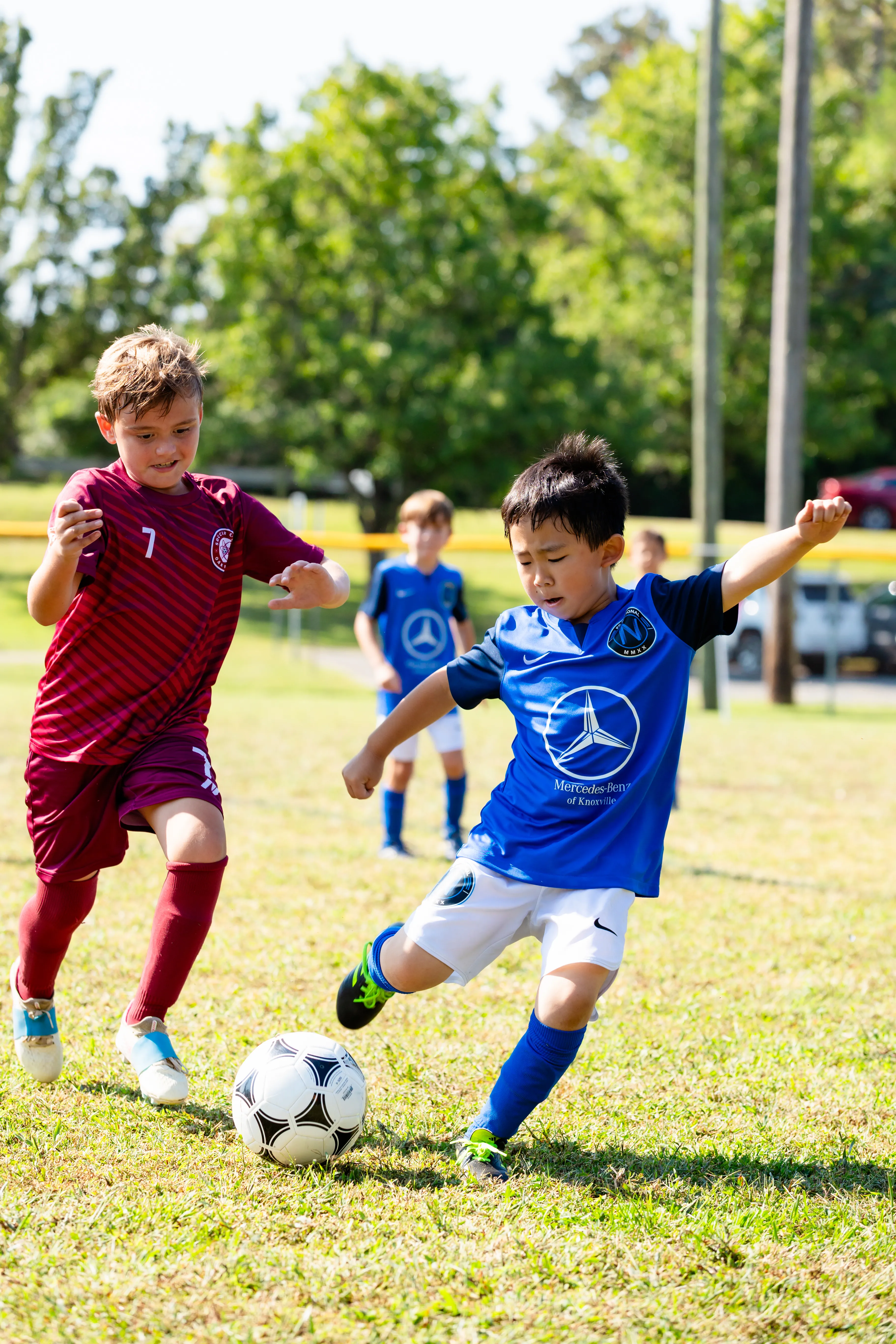
Nine-year-olds are ready for a little more soccer thinking. They still need the ball often, the setup needs to be simple and the session should still feel like play. But they can now begin to notice a teammate, receive with a plan, protect the ball from a defender and recognise when the easy pass is the smart one.
These soccer drills for 9 year olds are built around that next step. Each starts with a clear skill, then adds a choice, an opponent or a small game. Use cones, shoes or water bottles for markers. Keep groups small, demonstrate once and let players learn through the repetitions. If an activity has everyone standing around, it needs another ball, another grid or a better rule.
WHAT NINE-YEAR-OLDS NEED FROM PRACTICE
Nine-year-olds generally sit in the U9-U10 stage. U.S. Soccer's U9-U10 coaching guide highlights fundamental skills with both feet, short passing and receiving, winning the ball back and small-sided games up to 7v7. That is a useful compass for parents and volunteer coaches: build comfort with the ball, then give the player real decisions to solve.
At this age, the right challenge is not a complicated pattern with ten instructions. It is an activity where a player has to look up, make one choice and try again. Small-sided games do that naturally. They create more touches, more attacking and defending moments, and more chances for a player to learn how their movement helps a teammate.
1. COLOUR-CALL FIRST TOUCH
Set up four cone gates, each a different colour, around a square. Players work in pairs with one ball. The server passes to their partner and calls a colour while the ball is travelling. The receiver takes their first touch through that colour gate, then passes back. Switch roles after a few minutes.
Start with short, accurate passes and gates only a few steps away. The receiver should glance up before the ball arrives, open their body and use a soft touch into the chosen space. If that is too difficult at first, call the colour before the pass. Once players settle, call it later so they have to scan while the ball moves.
The real lesson is not getting every touch perfect. It is learning that the first touch should help the next action. Praise a player who sees the colour early, keeps the ball near their feet and tries the opposite foot. When a touch gets away, reset the ball and let the next repetition come quickly.
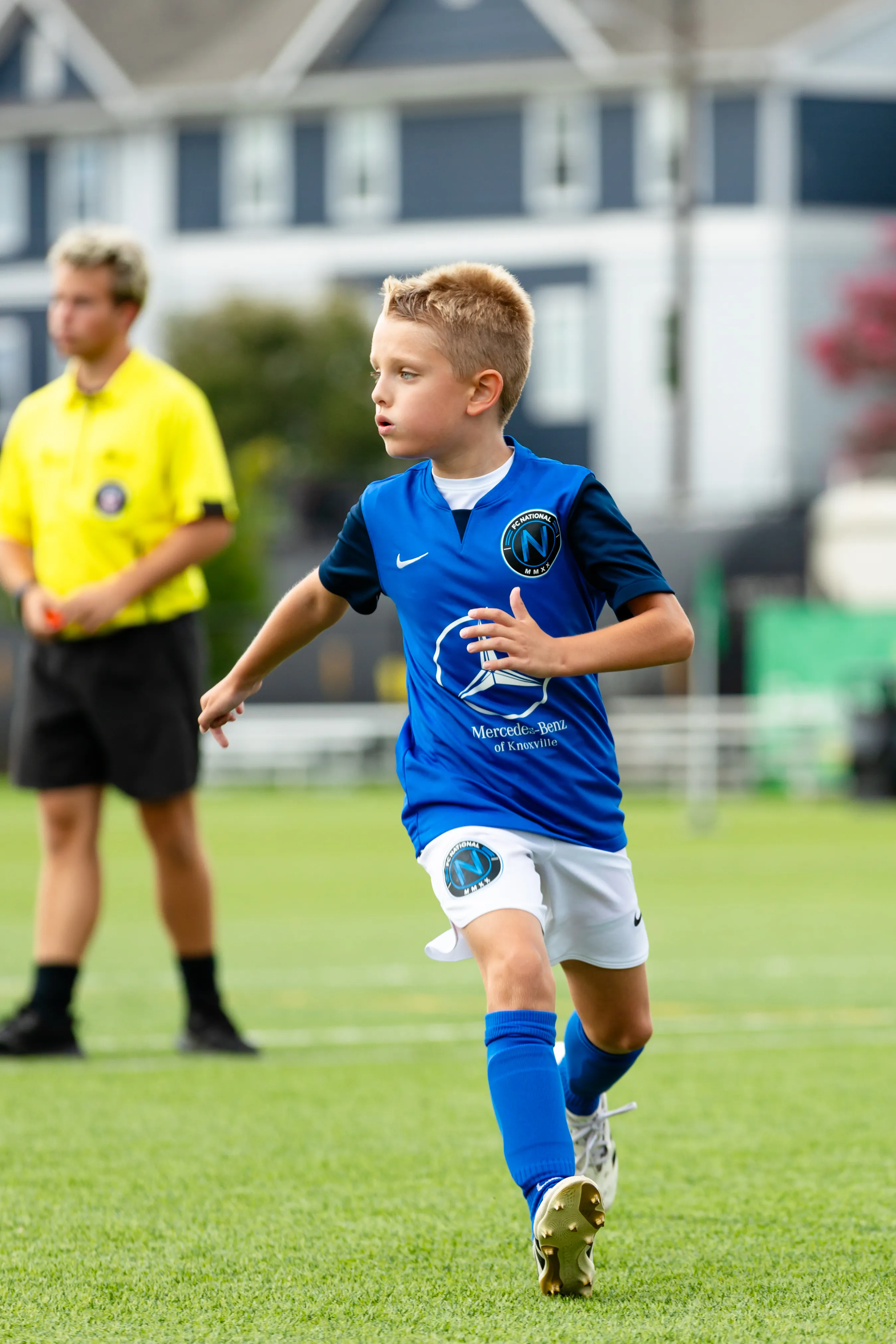
2. GATES PASS AND FOLLOW
Create several two-cone gates across a rectangle. Put players in pairs or groups of three, with one ball per group. Players score a point by passing through a gate to a teammate, then they must move to a new angle before receiving again. They cannot use the same gate twice in a row.
This game makes a basic pass more realistic. A player has to see a gate, judge the weight of the ball and move after passing. Remind players that a helpful pass arrives on the ground and at a speed their teammate can control. A player without the ball can help by stepping away from traffic rather than standing beside the passer.
For a simple progression, add a defender who can block a gate but cannot tackle. Then use a live defender in a larger grid. The group will quickly discover why communication matters. A short call, a point to space or a clear name can turn a rushed pass into a useful connection.
3. 1V1 TURN AND GO
Make narrow channels with a small scoring gate at each end. One player starts with the ball facing away from the defender. On the coach's signal, the defender applies pressure while the attacker tries to turn and dribble through either end gate. Keep each round to ten or fifteen seconds, then switch roles.
The attacker is learning to feel pressure, shield the ball and choose a turn. A simple pullback, inside cut or outside touch is enough. The defender is learning to approach under control, slow the attacker and win the ball fairly rather than diving in. Both players stay active, which makes the drill far more useful than a line waiting for a turn.
Change the size of the channel to control the difficulty. A wider channel gives the attacker time. A smaller channel asks for faster feet and better body shape. Keep the challenge friendly, especially if players are different sizes or confidence levels. The goal is brave repetition, not one player winning every round.
4. FOUR-CORNER PASSING GAME
Mark a square with a small target cone in each corner. Play 3v3 or 4v4 inside it. A team scores a point by completing a pass to a teammate standing near an open corner, then moving the ball away before the other team can win it. Reset quickly when the ball leaves the area.
The corner targets give players a reason to look across the field. They learn that when one side is crowded, a teammate may be available somewhere else. Ask simple questions during breaks: “Which corner is open?” “How can you help the player with the ball?” “Can you show for the next pass?” Let the game answer more than the coach does.
Make it easier by giving the attacking team an extra player. Make it harder by asking for two passes before scoring. For players who are new to this kind of activity, simply award a point for finding an open corner, even if the next pass does not work. Recognising the option is the first step.
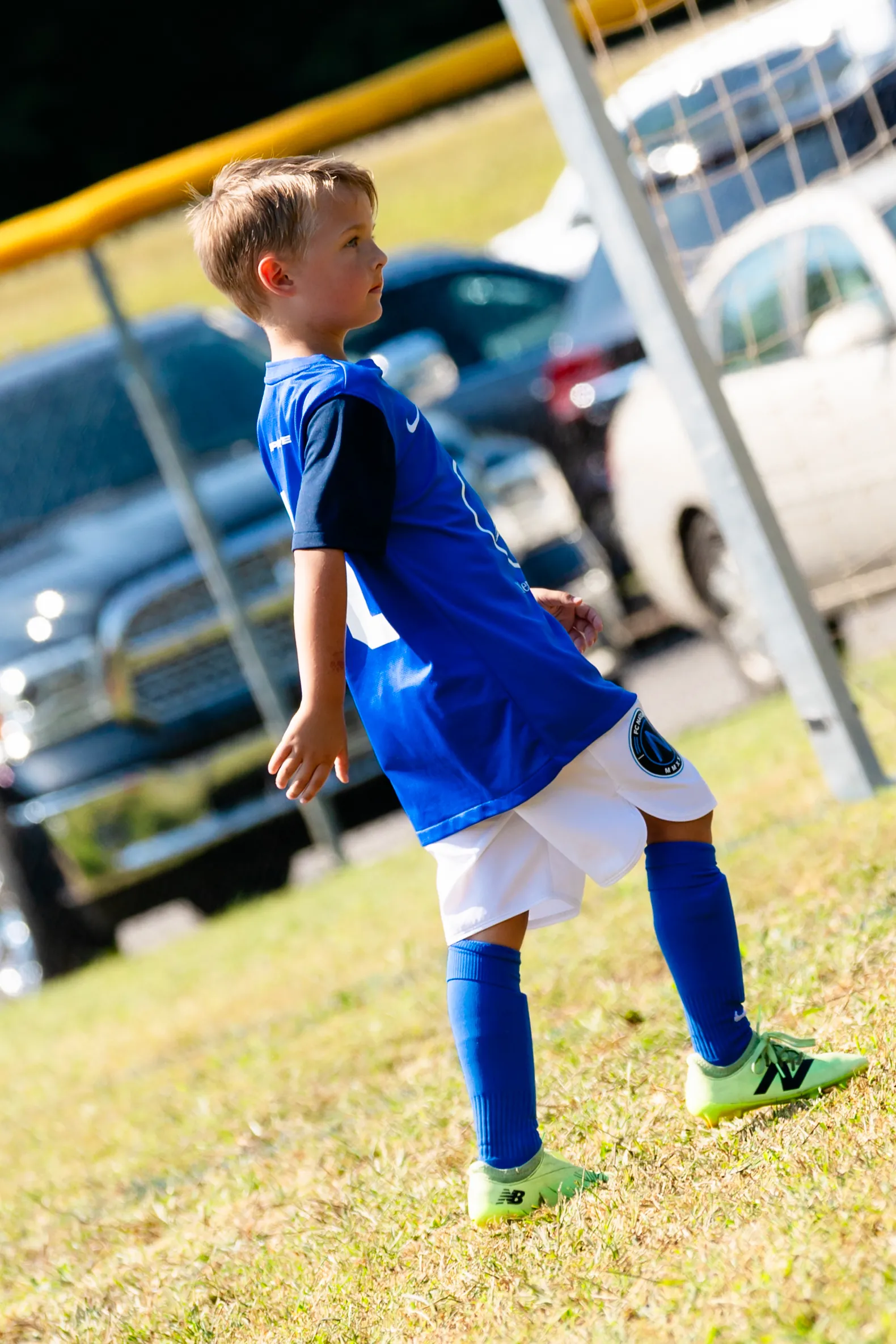
5. DEFEND THE GATE
Set up several small gates across a grid. In pairs, one player dribbles and tries to get through any gate. The defender starts a few steps away and tries to slow the attacker, steer them away from an open route and win the ball fairly. Play for twenty seconds, then trade roles.
Good defending at this age is not just a big tackle. The defender can arrive under control, stay balanced, keep their body between the attacker and the gate and wait for a loose touch. The attacker learns to change speed, use a feint and protect the ball. Because there are several gates, there is always a fresh decision instead of one predictable sprint.
Use a clear safety rule: no slide tackles and no pushing. If a player wins the ball, they become the attacker immediately. That quick transition keeps the drill lively and helps both players see that defending and attacking are connected moments in the same game.
6. NUMBERED FINISHING
Set up two small goals or targets. Give each goal a number. A player starts with the ball, dribbles toward the middle and listens for a parent or coach to call one or two. The player takes a touch toward that target and finishes. Once the group understands it, add a passive defender who follows behind.
Numbered Finishing connects looking up, first touch and shooting. The player should not rush the shot because the call has been made. Encourage a controlled touch to set the ball, a look at the target and a composed strike. The goal can be a small net, two cones or a safe target against a wall.
There is no need to turn every missed shot into a correction. Let players take a few attempts, then offer one useful cue: plant the non-kicking foot beside the ball, strike through the middle or choose the closer corner. Aim for calm technique first. More power can come later.
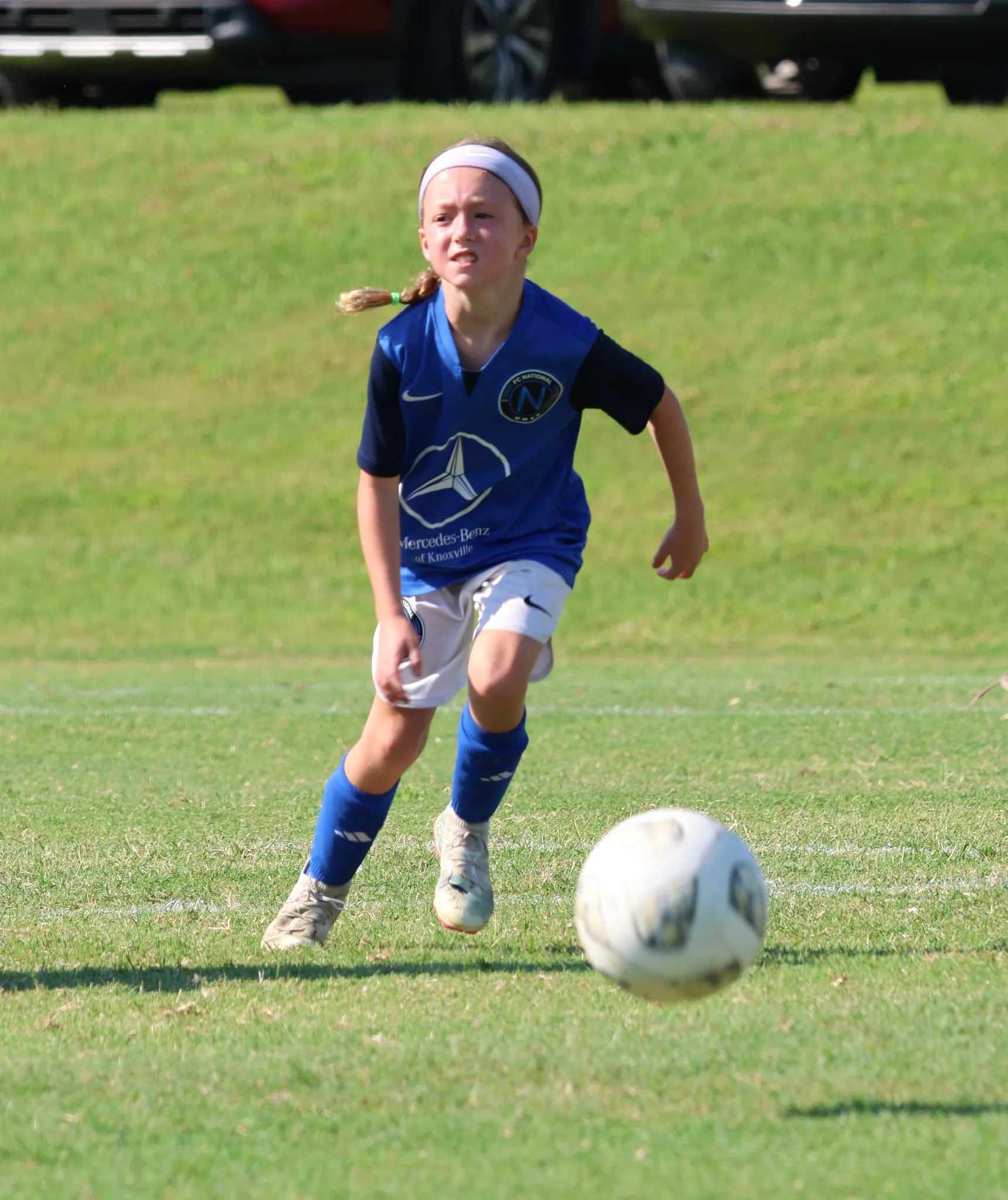
7. 4V4 TRANSITION GAME
Finish with a game. Use a small field with two goals and play 4v4, or 3v3 if the group is smaller. After a goal, out-of-bounds ball or turnover, restart quickly from the nearest coach or parent. Keep the teams small enough that every player attacks, defends and handles the ball often.
Give the game one focus from the earlier drills. It might be taking a first touch away from pressure, moving after a pass or recovering when the ball is lost. Avoid stopping the game after every mistake. Let players experience the problem, then offer a quick coaching point at a natural break.
A transition game is where the practice becomes soccer. Players see that a pass creates a new job, losing the ball asks for a quick response and a teammate's run can open a better option. The match does not need a complicated score system. It needs enough freedom for the children to play, compete and discover.
A SIMPLE 60-MINUTE SESSION
- Minutes 1 to 8: Free dribbling and a simple movement warm-up with a ball each.
- Minutes 9 to 17: Play Colour-Call First Touch in pairs.
- Minutes 18 to 27: Use Gates Pass and Follow.
- Minutes 28 to 37: Run 1v1 Turn and Go or Defend the Gate.
- Minutes 38 to 47: Play Four-Corner Passing or Numbered Finishing.
- Minutes 48 to 60: Finish with the 4v4 Transition Game and a positive recap.
Use the clock as a guide, not a command. Stay with the activity that has players thinking and smiling. Change the rule when the challenge becomes too easy or too frustrating. A successful session gives a nine-year-old many touches, a few good decisions and a reason to want to play again tomorrow.
HOW TO ADAPT THE GAMES FOR YOUR GROUP
Players of the same age will not all be at the same stage. One child may be ready to receive on the move and play with either foot, while another is still learning to make steady contact with the ball. Keep the same game, then adjust the space, the time or the rule. A larger grid and an extra touch can make a challenge achievable. A smaller grid, a time limit or an extra defender can give a confident group a new problem to solve.
Parents helping at home can use the same idea. Start with a version the player can complete, then ask for one small improvement. Perhaps the next round uses the other foot, a tighter turn or one look up before a pass. Do not rush to make every activity difficult. Repetition only helps when the player can stay relaxed enough to notice what happened and try a better answer.
It also helps to give children a little choice. Let them select a favourite turn for the 1v1 game, choose the target for a finishing challenge or make up one new rule for the final small-sided game. That ownership keeps the session playful and gives a coach a glimpse of what the player understands. It is a better route to confidence than demanding a perfect copy of every demonstration.
HOW FC NATIONAL SUPPORTS PLAYER DEVELOPMENT
FC National's player development approach connects technical skill, game understanding, movement and mindset over time. For this age group, that means purposeful training with plenty of action, a supportive response to mistakes and games that help players learn to make their own decisions.
Families can explore FC National teams, meet the coaching staff and review current tryout information when they are considering the next step. The best environment is one where a player can be challenged, enjoy the work and keep growing.
FC NATIONAL DEVELOPMENT
LET THEM PLAY. HELP THEM GROW.
FC National gives ambitious young players a competitive environment built around purposeful training, patient coaching and long-term development.
ASK ABOUT TRYOUTS →FREQUENTLY ASKED QUESTIONS
What soccer skills should a 9 year old practice?
Nine-year-olds benefit from lots of work with both feet, including dribbling, receiving, passing, turning, shooting and winning the ball back. Add small-sided games so they can practise noticing teammates, opponents and open space while they use those skills.
How long should soccer practice be for a 9 year old?
A focused 60 to 75 minutes is often enough for a team session at this age. Keep explanations short, limit standing in lines and use water breaks when conditions call for them. A practice should leave players feeling challenged and keen to return.
Should 9 year olds do passing drills without defenders?
Brief unopposed practice can help players learn a new action, but it should soon lead into a game or challenge with a real decision. Passing becomes useful when a player has to choose the right weight, direction and timing under some pressure.
How can parents practise soccer with a 9 year old at home?
A ball, a safe wall, a few markers and a small open space are enough. Try short, playful sessions built around first touch, passing to targets, turns and a game that lets the player beat their own score. Stop while the energy is still good.
RELATED POSTS
 PLAYER GUIDE
Soccer Drills for 8 Year Olds: 7 Fun Games
Seven simple soccer drills for 8 year olds that build ball control, confidence and game awareness while keeping practice fun.
 PLAYER GUIDE
Soccer Drills for 7 Year Olds: 7 Fun Games
Seven fun soccer drills for 7 year olds that build ball control, passing, movement and confidence through active games.
 PLAYER GUIDE
Soccer Drills for Kids: 8 Fun Ways to Build Skills
Eight simple soccer drills for kids that build touch, passing, movement, awareness and confidence without turning practice into a chore.